
In an iconic
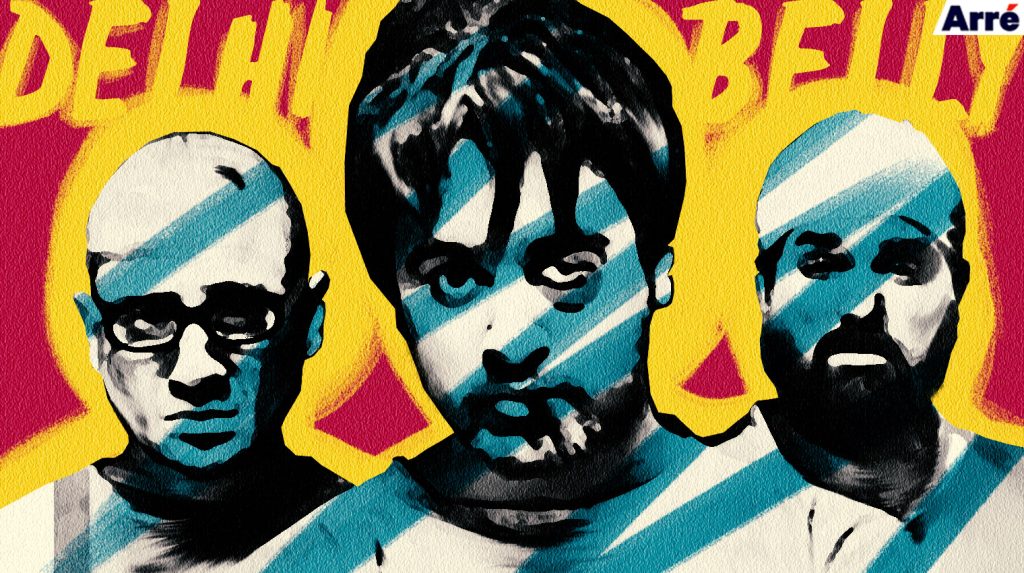
Delhi Belly reveal, a man who goes by the name Cowboy (Vijay Raaz) receives a mysterious package inside a shop called Indian Handicrafts. Earlier in the film, we learn that Cowboy is expecting a package containing pure diamonds worth crores of rupees. He naturally assumes that the Dabur Chyawanprash-like plastic container in front of him has those very priceless contents. Under the watchful eye of his goons, Cowboy takes a seat, spreads a red velvet cloth across the table before unscrewing the lid of the container. He then fastidiously brushes off the dust and slowly spreads its contents across the cloth. Out comes a trail of watery shit. If that weren’t ridonk enough, then a bald goon even takes up the responsibility of smelling the brown gooey matter, only to exclaim “Sir! Yeh toh tatti hai.” It’s this one scene that neatly sums up the cult-appeal of the film – its ability to derive compelling comedy from the absurd. Directed by Abhinay Deo, written by Akshat Verma, and produced by Aamir Khan, Delhi Belly, that turns seven years this week, felt less like an experiment ahead of its time and more like a giant middle finger to Bollywood. In a year that gave us Zindagi Na Milegi Dobara, No One Killed Jessica, and Rockstar, Delhi Belly was a film with no A-listers: Its eclectic cast comprised a bunch of relatively unknown names like Imran Khan, Vir Das, Kunaal Roy Kapur, Poorna Jagannathan, and Shenaz Treasurywala. There’s no dancing around trees or inexplicably heightened drama. In fact, the film rewrote the rules of situational comedy in an ageing industry resistant to change. Delhi Belly was one of the first instances of Bollywood attempting intelligent slapstick comedy, unabashedly covering everything that could offend a regular middle-class Indian moviegoer. From casual profanity to an unpalatable diarrhetic plotline, what made the film’s comedy stand out was how innately Indian it was. Its punchlines reek of a raw Indian sense of humour rooted in the deep recesses of a Hollywood screenplay writer’s mind. Take for instance, “Bhenchod agar phir haath lagaya na toh tere tatte kaat kar jhumke bana dunga.” Or my personal favourite, “Tujhe kya lagta hai, mere sar pe bandook rakhne se, meri gaand maarne ki permission mil gayi tujhe… bhenchod!”Asscracks seemed to be on permanent display along with apathy toward bathing, and an abundance of Panama cigarettes.Delhi Belly also didn’t attempt to sugarcoat the typical living conditions of bachelors where a constant state of “urban poverty” paves the way for routine indifference. The rundown house of the film’s leads were replete with unwashed dishes, rotting leftovers, stacks of cheap takeout menus, local Hindi magazines, fragile roofs, intrusive landlords, and the picture of someone’s boss with a dart stuck over it. Asscracks seemed to be on permanent display along with apathy toward bathing, and an abundance of Panama cigarettes. It’s the kind of atmospheric detailing that is not just relatable for a certain kind of millennial, but also assumes a lived-in quality of comic proportions that livens up the film’s proceedings. And that’s the best part about Delhi Belly. In a sea of formulaic youth-oriented films like Jaane Tu Ya Jaane Na, Love Aaj Kal, and Wake Up Sid, Delhi Belly is the loud fart in the elevator. Despite their commercial success and popularity, the films were gloriously sanitised, and offered a glaring disconnect with younger people. For they perpetuated a candy-floss image of a world where everything falls into your lap so long as you have hope and ache for happy endings. Despite their existential crises, the good-looking leads in these films led carefree lives that didn’t require them to cook, clean, pay rent, or be embroiled in fucked-up situations that progressively got worse.

It cleverly derived inspiration from Hollywood and still managed to tug at our Indian hearts with the ultimate millennial attitude towards adversity – shit happens.
Image Credits: UTV Motion Pictures