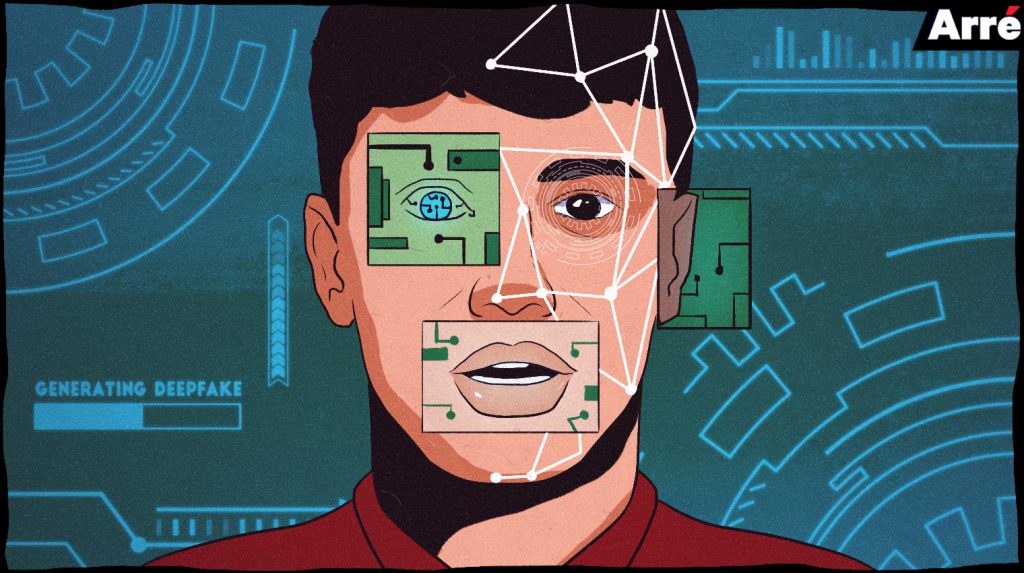

Now, it should be said that Neon has assured everyone that privacy is their top priority. But then, so did Facebook, and now everyone knows my relationship status is a frown smiley, so any assurance given by tech companies should be viewed with scepticism. Because, even considering the remotest possibility that the company has the best intentions, there is always a human waiting to use technology to prey on other humans. Incidentally, it is this tendency that makes AI’s argument for killing all of us so compelling. To take a more real-world example, a recent Vice report, investigated how the technology behind deep fakes was used by the BJP in their recently concluded, albeit unsuccessful, election campaign in Delhi. While AAP’s Arvind Kejriwal was out campaigning and giving speeches like a real boy, the BJP decided to use tech to sidestep the language barrier. According to the report, videos emerged of Delhi BJP President Manoj Tiwari speaking multiple languages, including Haryanvi — a language he has no proficiency in — and English, in a bid to speak the language of each voter. Shared on WhatsApp, the video went viral and reached over a million people. It contained what’s referred to as a “lip-sync deep fake”, where the person’s voice is dubbed and their lips replaced to make it appear like they are speaking the words. Deep fakes are not necessarily new. The adult film industry has been pasting celebrity faces on pornstar bodies for years now (a “friend” informs me that these videos are getting more realistic with each passing month). Considering the adult film industry has always been at the forefront of new technology (it’s in their best interest, after all), the quality of deepfakes is only going to keep improving. With the technology getting better and more accessible, there is the very realistic and worrying prospect of deep fakes being used to spread misinformation. Think revenge porn, or politicians spreading conflicting messages to appeal to different voter groups…,or revenge porn. Seriously, anyone with an ex with even the slightest proficiency in IT should be a tad worried at this point.All sci-fi stories end up with the same conclusion: Humans are the problem.
In a world where social media allows us to spread information like never before, or where a bored aunt or grandparent is ever ready to blast everyone in their WhatsApp universe with a piece of sensationalist news, this is immensely problematic. Imagine a video of Donald Trump declaring war on Iran shows up online, complete with his voice, silly hair and orange skin. Or a video of Christopher Nolan saying he would cast Tiger Shroff in all his upcoming films. Both these scenarios are likely to cause panic across the world (different worlds of course), causing damage that will take years to be undone. Basically, we’re reaching a tipping point, where the intention to spread misinformation is just about coinciding with the technology to make it believable and an unprecedented ability to spread it at zero cost. For now, we can rest uneasy knowing that the technology is still a long way from being truly convincing. So, enjoy your chat with a virtual Beyonce. Engage in healthy banter with a Rajdeep Sardesai bot. But for the sake of sanity, if Beyonce starts asking for your mother’s maiden name or the city in which you were born, exercise some caution. We can’t go about blaming AI if we’re being just plain stupid.The AI chatbot is effectively a virtual avatar that — from early visuals online — looks surprisingly lifelike.