
W
hen it comes to hobbies and pastimes, I’m pretty pedestrian. At the end of a long day, you’ll rarely find me hitting up a rock-climbing gym or a chic new cocktail bar. Instead, I am a lover of the great indoors, and my chosen state is inert: being a couch potato. I can’t pretend to be a cultured introvert who likes to curl up with a
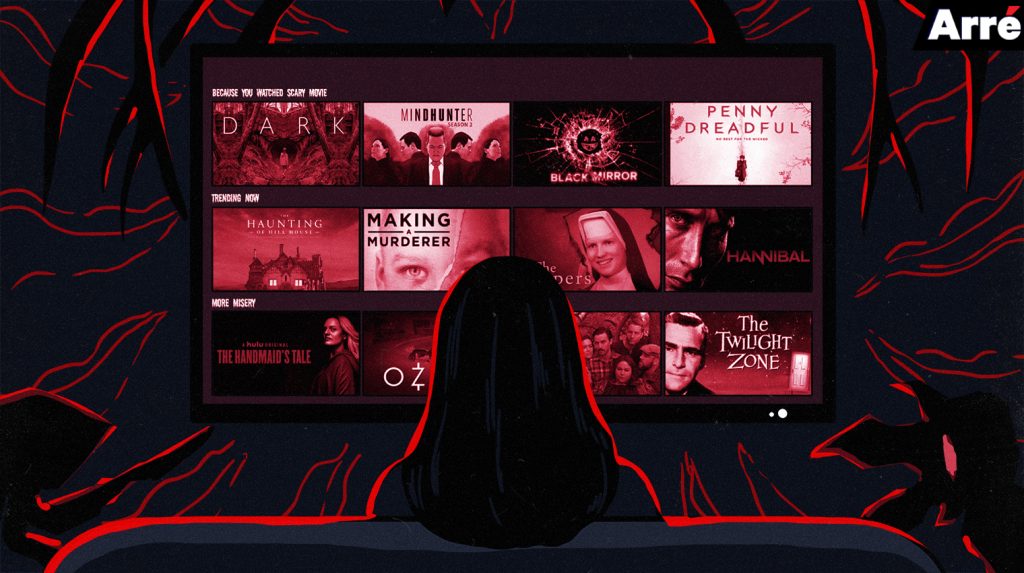
good book. But give me a bowl of popcorn and a laptop loaded with streaming subscriptions, and I will spend a happy evening. In this golden age of entertainment, can you blame me for my boring habits? It’s not just about the tremendous convenience of lolling around in your underwear as you select your own personal version of “dinner and a show” with a couple of clicks. There’s also a cultural imperative to spend most of your spare hours watching TV. Every day, the questions come rapidfire from friends and colleagues: Did you binge Sacred Games over the weekend? How have you not seen Mindhunter yet? If you haven’t watched Fleabag, do you even really count? The FOMO is real. Every month comes a sheaf of groundbreaking, life-changing, must-watch shows — required viewing for anyone who wants something to talk about at the parties they definitely aren’t going to, because guess what, they stayed home to watch Peaky Blinders. But even this paradox is not what gets under my skin. It’s the fact that so many of these amazing shows are not so much relaxing entertainment as they are a brutal exercise in sadomasochism. The age of Peak TV has brought with it a new obsession with grim TV shows. A BBC culture feature titled “Has TV Become Too Violent?” offers an explanation for this phenomenon. The author writes, “The cliche that TV is the ‘new novel’ remains vital in one respect: the more literary, symbol-laden and existentially despairing a work is, the more likely it is to receive sober analysis and the respect of its creators’ peers.” So perhaps in a quest for critical acclaim, makers are turning to more dark themes? But the same article ends with the prediction that we’re due for “a new wave of quality optimism, of the best minds of the TV industry applying their artful sensibilities to the themes of joy, intricately adroit romance, and madcap generosity.” That article was written in 2014, and it looks like we’re still savouring suffering and strife on our screens.Wouldn’t it be nice to tune into Netflix and be greeted by a bunch of hilarious and uplifting content, instead of a solid wall of doom and gloom? Sacred Games 2/Netflix
For TV creators to draw from the biggest concerns of that which surrounds them, and that resonates with their cynical, terrified audiences is only natural. You could even say it’s their responsibility. But life is stressful enough without climbing onto the blood-spattered emotional rollercoaster of Mirzapur, or the myriad other shows that insist on plumbing the depths of humanity. Maybe I’m old-fashioned, but I still like to watch shows for entertainment and enjoyment, not just torture. Thankfully, as TV replaces cinema as the dominant medium for prestige dramas, films are swooping in to fill the void with lighthearted offerings like the Marvel Cinematic Universe and endless sequels that require little emotional investment. Wouldn’t it be nice to tune into Netflix and be greeted by a bunch of hilarious and uplifting content, instead of a solid wall of doom and gloom? Wouldn’t it be nice if I didn’t have to resort to watching old childhood anime whenever I want a bit of joyful escapism — and most of all, wouldn’t it be nice if they brought back Santa Clarita Diet?For TV creators to draw from the biggest concerns of that which surrounds them, and that resonates with their cynical, terrified audiences is only natural.