
B
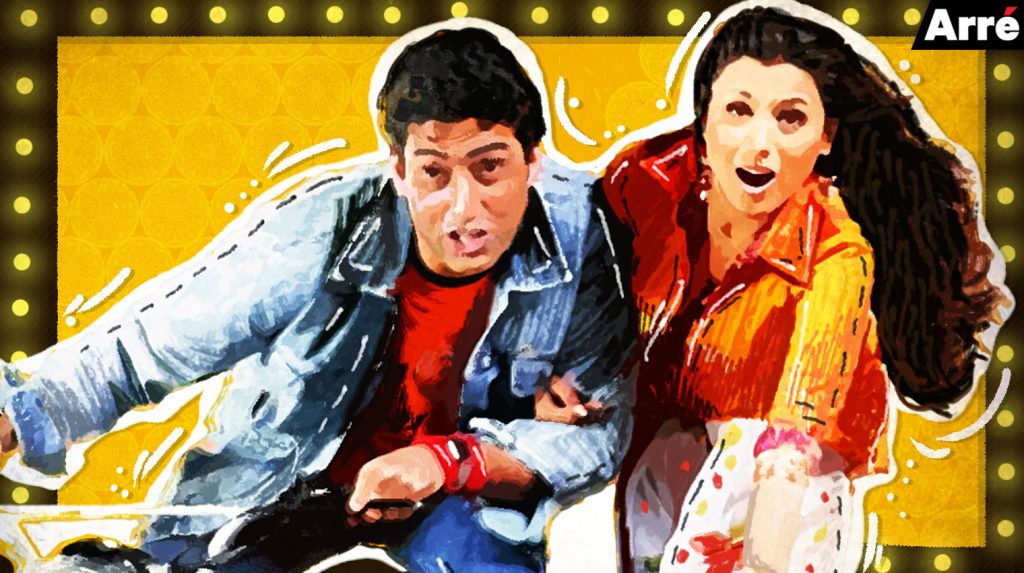
ack in 2005, Amitabh Bachchan collaborated with his son, Abhishek Bachchan, and the latter’s rumoured flame at the time, Rani Mukherji, on two vastly different but highly successful films. There was Ram Gopal Varma’s stirring Sarkar, where Big B essayed a fictionalised version of Shiv Sena chief Bal Thackeray and Abhishek played his upright son. And, then there was Sanjay Leela Bhansali’s evocative Black, where he played a mentor to a blind-and-deaf Rani Mukherji. Later that year, all three of them came together for the casting coup of the decade: Shaad Ali’s Bunty Aur Babli. Not only was it the first reel-life pairing of the Bachchan men, (Sarkar had yet to release), but was also padded up with an unforgettable item number by a saucy Aishwarya Rai. It was this ability to take a gimmick – like having Amitabh and Abhishek in the same frame or item number – and devising a desi Bonnie and Clyde crime caper that defined Shaad Ali’s second directorial outing. Bunty Aur Babli, which completes 13 years this week, should be remembered for a lot of things: Shankar-Ehsaan-Loy’s deliciously loop-worthy soundtrack, Amitabh Bachchan having the most fun in a supporting role in years, Shaad Ali rekindling Rani Mukherji’s vivacity after reinvigorating it in Saathiya, and Aki Narula affording it the most dramatic, outlandish fashion. But, what it should be lauded for – despite its nearly three-hour-long-runtime – is how shameless it was in being a tribute to fluffy mainstream masala filmmaking. With an ensemble cast that boasted of stalwarts like Prem Chopra, Puneet Issar, Raj Babbar, Sanjay Mishra, and Ranjeet, Bunty Aur Babli’s infectious charm lay in being just the right amount of OTT. In fact, the film might have been the last instance of a successful tribute to the masala genre before it got hijacked by Salman Khan and lot, and was reduced to nonsensical garishness.
In the film, Abhishek plays Rakesh Trivedi, a wide-eyed resident of small-town Fursatganj (a place where people have “too much free time”) who is adamant to defeat the small-town mentality of his parents, relatives, and acquaintances to emerge as the next Tata or Birla. So, when his ticket-collector father (Raj Babbar in fine form) insists he go for a railways interview to settle for the same nine-to-five life replete with monotonous drudgery as him, Rakesh flees. Then there’s Rani’s Vimmi Saluja, who perfects the small-town iteration of Kareena Kapoor’s Poo from K3G. Sample her opening line: “Agar apne sundarta ki pooja karna pagalpan hai, toh haan main pagal hoon.” Like any other girl growing up with a healthy dose of Bollywood aspirations, Vimmi too dreams of being a part of the circus. She wants to go from being the person who wears cheap knockoffs inspired by her favourite actresses to being the celebrity whose clothes get replicated by the umpteen tailoring shops across India. Her parents on the other hand, thwart her dreams of becoming Miss India by demanding she become Mrs to a head clerk in Pankhinagar. Naturally, she responds by fleeing. A chance encounter in a bathroom at a dingy train station, leads to their identities getting a makeover as the conmen Bunty Aur Babli. If you pay enough attention, Bunty Aur Babli also turns into a vigilante justice film at some level. Its leads are, after all, exacting revenge not from random people, but from a society that didn’t think enough of their dreams. In a way, Bunty Aur Babli was also one of the first few mainstream films that articulated the growing aspirations, claustrophobia, and frustrations that countless youths from small towns internalise. Unlike their parents, these youngsters want to take advantage of their country’s socioeconomic transformations and don’t want to believe that anything is out of their reach. Most importantly, the film also offers a thoughtful commentary on the dichotomy of India – where life in the small towns is alien to the mechanics of the big cities. Come to think of it, it’s hard not to think of Bunty and Babli as the early predecessors of Shruti and Bittoo from Band Baaja Baaraat.Bunty Aur Babli also offers a thoughtful commentary on the dichotomy of India – where life in the small towns is alien to the mechanics of the big cities

Not only was Bunty Aur Babli the first reel-life pairing of the Bachchan men, but was also padded up with an unforgettable item number by a saucy Aishwarya Rai.
Image credit: Yash Raj Films