
T
oward the end of Steven Spielberg’s The Post, set in 1971 and the spiritual prequel to All The President’s Men, comes a line soaked in relevance for the press and the media owners of today. “The press was to serve the governed, not the governors,” utters Chief Justice Black, delivering a judgement in favour of the New York Times and the Washington Post after the Nixon administration took the papers to court. The errant newspapers had published the classified “Pentagon Papers” that laid bare the lies that the American government had been disseminating to the public about the country’s political and military involvement in the Vietnam War. The most damning revelation was how the Nixon administration continued drafting soldiers for the war despite being aware that America would lose. The Post chronicles the days that lead up to how the Washington Post, then a largely local paper, plays second fiddle to the New York Times, and publishes the Pentagon Papers after the Times had been taken to court for doing the same. Their “punishment” was intended as a message for all newspapers who were even daring to think about the report. In those conflicted times, when many owners would have rather safeguarded their business than attack the Nixon administration and end up serving a prison sentence, it was the Washington Post’s publisher, Katherine Graham (Meryl Streep) and its editor Ben Bradlee (Tom Hanks), who displayed exemplary courage. The duo took on the Nixon administration head on, and published a series of damning reports revealing the extent of the lies being told to the American public. They did it despite several personal and professional hiccups, including jeopardising the future of the company. For Ben Bradlee, who believed in the power of a free and fair press (evidenced early in the film when he refuses to allot a different reporter to cover the President’s daughter’s wedding because the government had refused access to their usual White House correspondent), the choice to publish was excruciating simple. Not only would they hold the government accountable, but they would also be showing solidarity with the New York Times. Of course, in the process, the Post also got the benefit of not being regarded as just another local paper, when a host of others followed their lead and published the report on their front pages as well.In the era of fake and paid news that we live in today, where the freedom of the press is under attack across the globe, the film’s appeal for a brave media and even braver owners has never been more relevant.But for Katherine Graham, the heir and the new owner of the paper, passed down to her after the demise of her husband, the decision was much more difficult. For one, her gender ensured the other patronising board members did not take her inputs seriously. Besides, the decision to publish could also come in the way of the paper’s public offering, with many investors threatening to bow out if she did decide to go ahead. Then there was her friendship with the government officials indicted in the very report her paper was about to publish. Graham, inevitably, was at loggerheads with doing what was best for the company she loved and be willing to speak truth to power. In the era of fake and paid news that we live in today, where the freedom of the press is under attack across the globe, the film’s appeal for a brave media and even braver owners has never been more relevant. With state governments issuing media gags, publications shying away from reporting on the mysterious death of a judge presiding over the explosive Sohrabuddin Sheikh encounter case, and the tussle between “pageviews” and quality reporting, even the Indian media is admittedly at its rock-bottom.

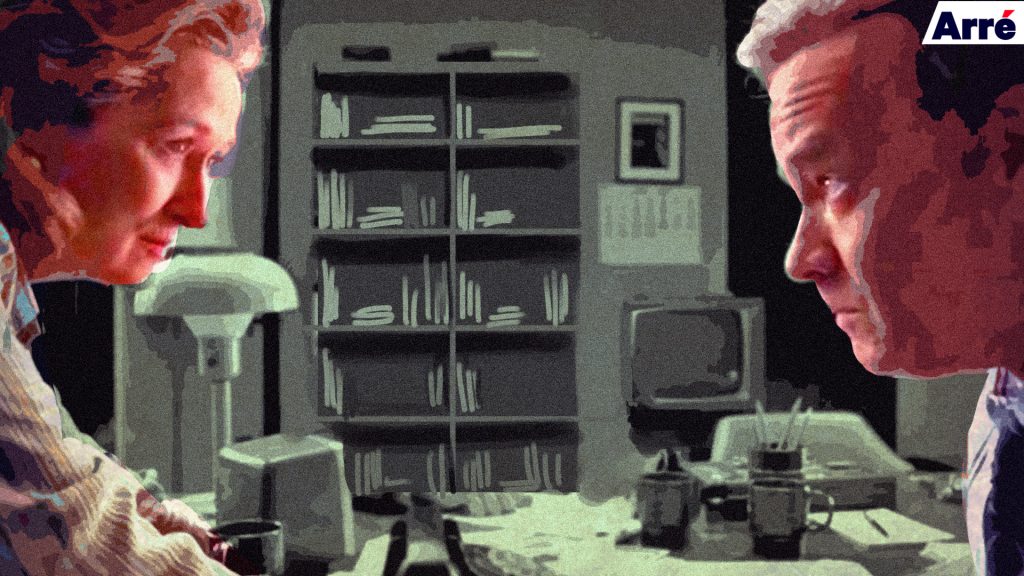
For Ben Bradlee( Tom Hanks), who believed in the power of a free and fair press, the choice to publish The Pentagon Papers was excruciating simple Image credit: 20th Century Fox