Category: People

  • Bad Boy Billionaires Take Note: The World’s Richest Woman, MacKenzie Scott, Is also the Most Charitable

    Bad Boy Billionaires Take Note: The World’s Richest Woman, MacKenzie Scott, Is also the Most Charitable

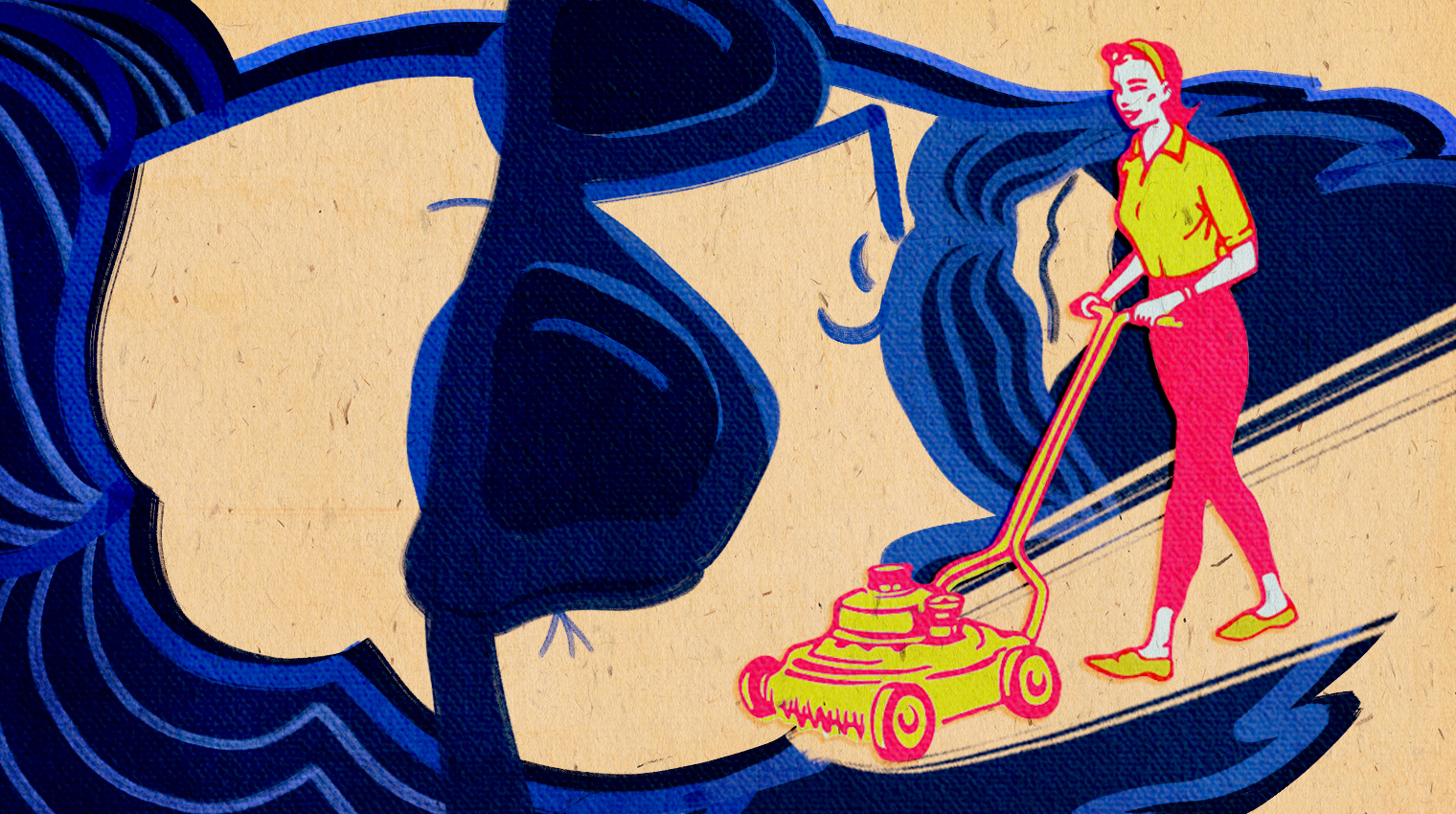
    When MacKenzie Scott divorced Amazon founder Jeff Bezos in 2019, the company shares she received as part of the settlement instantly catapulted her into the list of the world’s wealthiest individuals. This year, as Amazon became one of the few companies to actually see its stock rise during the pandemic, the boost to Scott’s net worth saw her become the richest woman in the world. In September, the Bloomberg Billionaires Index declared that Scott’s total net worth amounted to $ 66.4 billion. And in addition to being the world’s richest woman, Scott has also proven to be the world’s most charitable, giving away vast sums amounting to billions of dollars to charity, setting a philanthropic example for her fellow members of the ultra-rich. Yesterday, Scott published a blog post titled “384 Ways to Help”. In it, the 50-year-old award-winning author outlined the manner in which she has been accelerating her “donation strategy”. Since July this year, in the space of just over four months, Scott has donated $4.15 billion dollars to 384 organisations across the United States. This comes after Scott’s announcement in July that she had already given away $ 1.7 billion to 116 charities. Last year, Scott signed The Giving Pledge – an initiative where the world’s richest people commit to donating vast sums to charity – and vowed to give away at least half her personal wealth to charitable causes during her lifetime. Scott’s commitment to charity is of a markedly different stripe than many other philanthropists, which is what makes her stand out. Rather than setting up a foundation in her name or dictating how her donations should be used by the recipients, Scott simply chose to give out small grants to a diverse array of small charitable organisations and educational institutions. A profile of Scott by author Stephanie Clifford, published in October this year, says that she is “making a mark as a new kind of philanthropist.”

    Since July this year, in the space of just over four months, MacKenzie Scott has donated $4.15 billion dollars to 384 organisations across the United States.

    During her 25-year marriage to Bezos, which saw Amazon grow from a garage-run start-up to the golden goose that made Bezos the richest man in the world, Scott was rarely in the spotlight. However, when the news of the couple’s divorce first broke in January 2019, Scott’s newfound status as one of the globe’s highest net-worth individuals saw her become the target of some misogynistic comments. The fact that Scott was Amazon’s first-ever employee and a central figure during its early years, and therefore entitled to her shares and stake in the company, was forgotten by internet trolls in favour of a narrative about a “gold-digger” who got rich by riding on the coat-tails of a man’s success. Scott is now single-handedly rewriting that narrative – rather fitting, considering her career as an author and Amazon’s origins as an online bookstore. In 2020 alone, she has given approximately $6 billion to charity, while also publishing details like a list of organisations that would be receiving funds, as well as the total number of organisations her team considered before shortlisting the recipient. In her blog post, Scott said, “This pandemic has been a wrecking ball in the lives of Americans already struggling… Economic losses and health outcomes alike have been worse for women, for people of colour, and for people living in poverty. Meanwhile, it has substantially increased the wealth of billionaires.” This self-aware nature of her own wealth, and its potential to be used for improving the lives of others, is evident in the almost unprecedented pace at which she is donating it. The unpleasant reality is that wealth inequality is what leads to billionaires existing in the first place; however, if they took a cue from MacKenzie Scott, the world might be a better place.
  • Delivery Boys, the Angels of the Age of Apps

    Delivery Boys, the Angels of the Age of Apps

    In this stress-laden 21st century where everyone seems to get hungrier and lazier by the minute, food delivery apps are the greatest invention of mankind since the “mute call” option. And with a hundred menus at my fingertips and a lot of

    depression to eat away, I am certainly capitalism’s favourite child. Remember “Saat samundar paar main tere peeche peeche aa gayi,” from Vishwatma that was once the purest expression of love? That’s the song playing in my head when a delivery boy travels over five kilometres to bring me a single box of fries. I really do mean it. For anyone struggling to survive, pay rent, work 12 hours, and flux toxins out of their body, food delivery boys are our mediums to nirvana. And apps like Zomato, Swiggy, and Uber Eats, are the matchmakers that lead us to these angels. Most of us sit behind desks in centralised AC offices or classrooms and then complain about our bodies turning into lead at night, but can you imagine having to navigate through maximum shitty traffic all day, every day and then politely deliver five-star meals while your back turns to sawdust? Yep, didn’t think so. After the viral Zomato incident, where a rider was caught on camera eating from a customer’s order, there has been at least some scrutiny of a delivery boy’s life. Zomato promptly sacked the rider, but it led the internet down the rabbit hole of unfair work hours, minimum wage, work benefits, and the sheer thanklessness of the job itself. While tampering with an order that you’re meant to deliver is an offence, most of us were also quick to recognise the helpless hunger it must have arisen from. Ever since then, I have paid closer attention to the gruelling pieces of the delivery puzzles: from the incessant calls they’re required to field to being held responsible for the lackadaisical attitude of restaurants. It’s actually a lonely, high-stakes, low-return profession. Think about it: On a hot summer days, does it really occur to us to offer a glass of cold water to a delivery guy, who looks like he is seconds away from curling up on the ground. While we sit by the phone, fuming over the wait time that just got longer by two minutes, our first priority is hardly the man out there ramming the accelerator to God’s glory, risking his ligaments.
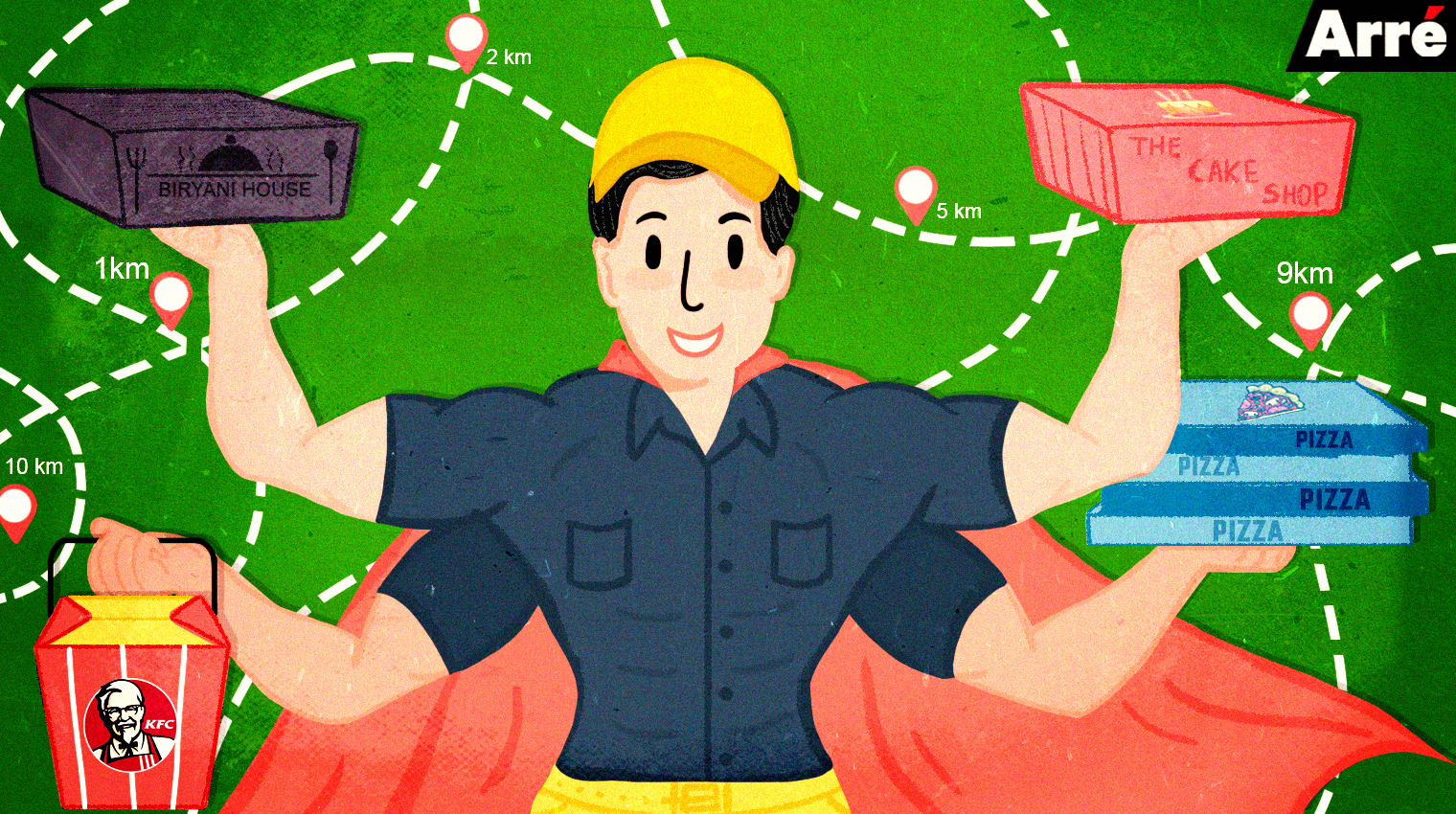
    Some superheroes have mutant powers, some have capes, and some have 25 packets of biryani hanging from their mortal arms.
    Everytime I call for food, Zomato’s navigation system draws the path to my house through a lane that used to be open, but now has a giant apartment complex obstructing it, making it a dead-end. Friends who I have known since middle school keep confusing the direction to my house but these swarms of professionals hit dead-ends, swerve back, and scale all heights of hell to find me and deliver me my nachos dip. In fact, if the Marvel Cinematic Universe had ever casted these delivery boys in the Avengers franchise, then they’d have found and stopped Thanos before his ETA. If you think I’m exaggerating, here’s what their day entails: Their daily jobs revolve around navigating their way around town to serve Indian customers and it’s really no secret how terrible Indians are with directions – we basically treat directions like a giant-ass puzzle. To reach “19A Sovabazar Street”, we’ll offer them something resembling the following: “Walk past the fifth chai stall, somersault through a stone statue of Cupid, stop bang opposite the Garden of Death, and then look for the purple door on the first floor”.   Any normal person would sooner find their long lost will to survive than end up correctly tracing these directions to find their destination. But not the delivery boy – he will hang ten packets of biryani from either arm and defty cut through traffic on their bikes (not always responsibly, I agree) and always show up. On time. And as any hungry person will tell you, nothing can make your day as beautifully as a delivery boy arriving with your food, 10 minutes before their estimated time of arrival. Sex and all may be great, but this is the best feeling of all. As someone who has ordered out to the extent of possessing an irrevocably damaged immune system, I not only know menu cards like the back of my hand but also share a peculiar comfort level with my local delivery boys. Sometimes, we complete each other’s sentences, like two days ago, when I was in the middle of announcing my address, Rajiv cut me off with a “Haan yaad hai, aapne New Year’s eve ko single-bowl-meal mangwaya tha. Wahin ghar na?” Check-mate, Rajiv. Then there are days when we exchange stories of woe on my doorstep, without sharing any history of familiarity: I vent about how my bus got caught for hours in the unforgiving Kolkata traffic and Soham tells me about how he was unfairly fined for jumping a stop sign that magically appeared. I suppose I feel oddly protected, knowing that I have a safety net in a whole bunch of silent guardians touring the city for my impromptu depression snack. Some superheroes have mutant powers, some have capes, and some have 25 packets of biryani hanging from their mortal arms. Who is to say which one is superior?
  • The Lost Girl on the Train

    The Lost Girl on the Train

    W

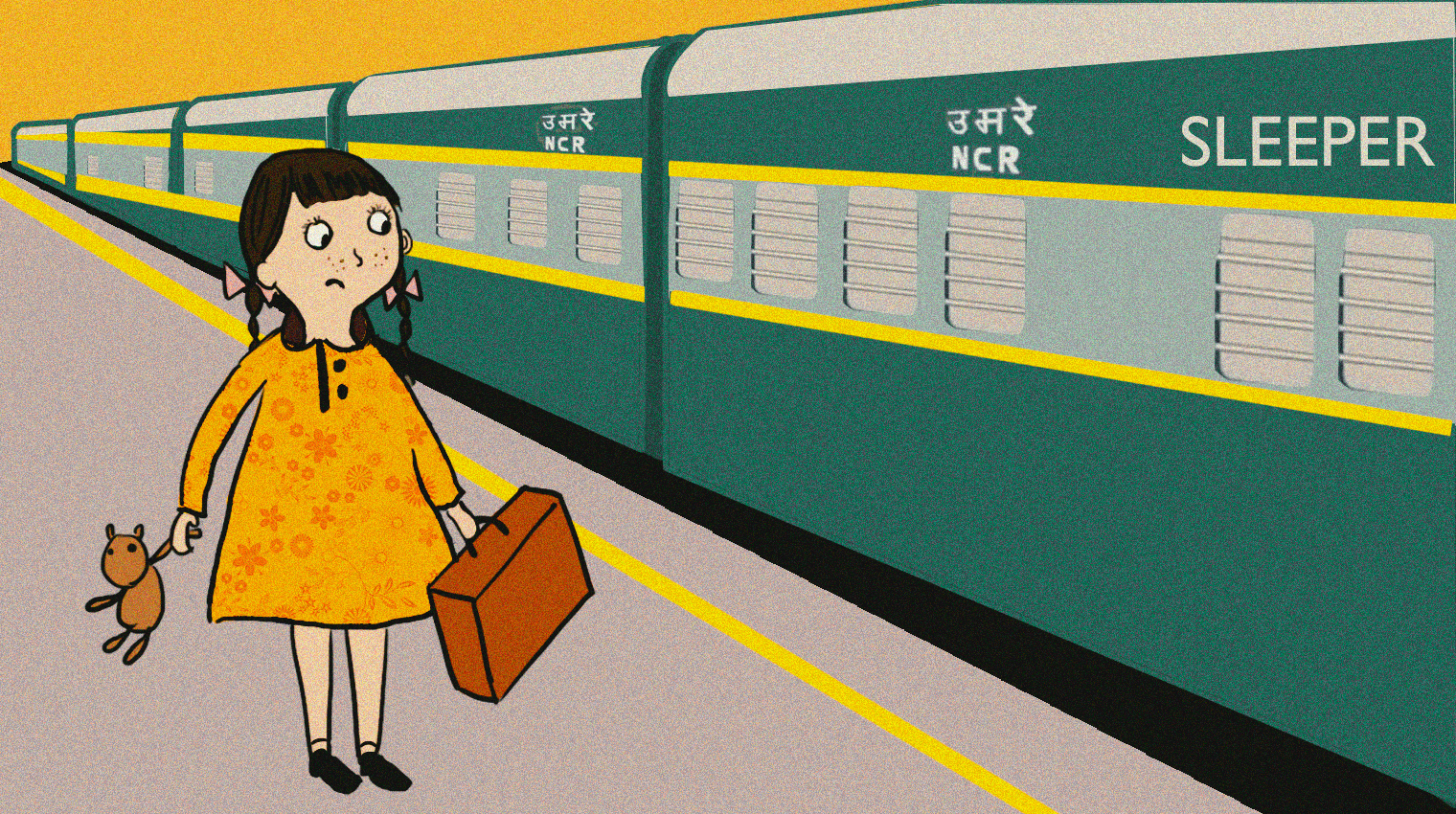
    hen Iqra fled her hostel in Panchgani, she didn’t know that her life was about to change. Iqra was packed off to a small, dingy boarding school after Class V, since the village she lived in near Indore had no higher education. She missed her family terribly. One day she decided that she would go back to Ammi. So in the dead of the night, she silently got out of her bed, collected all the pocket money she had saved up, and ran to catch a train. She hopped on to one happily and watched the stations go by. After a few hours had passed, she asked a friendly-looking lady when her village, Sivani, would come. That’s when she found out that she wasn’t headed toward Ammi’s loving arms. Not anytime soon at least. Iqra had been too elated at the prospect of seeing her parents that she hadn’t noticed she was boarding the wrong train. Fellow passengers advised her to alight at Mumbai, the last stop, and take a train from there. As soon as she got off, she ran to the station master’s office and asked him when she could board the next train to her village. It would only be the day after. She would have to spend the night at the station. That’s where she bumped into Shafiq, a railway worker, who whisked her away to a seedy hotel room near the railway station. After his job was done, he put her back on the train to make her way in the world. Iqra’s destiny could have taken her to darker places had it not been for one commuter who had taken note of the crying child and led her to Shobha.

    ***

    Close to 8,000 runaway children have been found at railway stations in Mumbai since 2006, most of them between 10-15 years old. Some are running from abusive families, others have left looking for work, and a few others just want to meet Shah Rukh Khan. You’ve probably seen one at some point – a waif-thin kid lost in a crowd or huddled up in a corner. You’ve probably walked away. It isn’t just you, the police have often walked away too. Very few people actually ask the children their story.

    None of us want to get involved in the complicated, often-heartbreaking lives of the children stranded on our roads and railways.

    I remember the time a child boarded my compartment with only one shoe on, crying loudly. Nobody seemed even mildly moved by his tears. In between sips of water and deep sobs, he told me he had been separated from his mother. He hadn’t run away. I took him to the constable on duty, who promised to ensure the child reached home safely. As I was walking toward the skywalk, however, the boy came running back to me. The constable had asked him to get lost as soon as I’d left. None of us want to get involved in the complicated, often-heartbreaking lives of the children stranded on our roads and railways. They’re victims of problems too deep-rooted for us to address. So we look away. Runaway kids have fled from real homes with real parents, but in the process lost their paths back forever. Trains are the easiest option for ticketless, panicky travellers – they’re constantly on the move, provide shelter, and rarely have anyone checking tickets. Once the children board these trains, they join the millions of destitute people already living on the streets. They are also vulnerable to predators like Shafiq, who keep a hawk eye to exploit the many children that come off the trains every day. Occasionally, however, the gods smile upon these lost children. A kindly commuter will lead them to a kindly constable who will take them to the green makeshift tent where Childline India operates at most railway stations. After the devil had had his turn with her, that’s exactly what happened to Iqra. Iqra was found crying on a Dadar-bound train by a woman commuter who chose not to walk away. Noticing the weeping girl in torn clothes, the commuter immediately took her to the constable at the next station, where Childline India was called. On the other side of the line was Shobha, a curly-haired Maharashtrian woman with a large, friendly face. Shobha’s first instinct in these cases is usually to first ensure the child is fed, has had a proper bath, and is given fresh clothes. Later they would have plenty of time to talk. Iqra took time to open up to Shobha. When she eventually did, she told the Childline volunteer about Shafiq. Over the next few weeks, a crack team was engaged with the help of the Railway Police Force to find this man. The force’s video team scrubbed the security footage at the railway station, and Shafiq was tracked down. For the next couple of years, Shafiq’s case argued. During this period, Iqra stayed and studied at a children’s home in Mumbai. A year and a half from the day Iqra got lost, Shafiq was convicted and sentenced to seven years in jail. Shobha emerged victorious at the end of this period. She knows that that not all cases have happy endings like Iqra’s. There are millions of children who are never found and millions who never get justice. But every happy ending gives Shobha’s life meaning. And every happy ending begins with that one commuter who chose not to walk away.
  • DIY Happiness

    DIY Happiness

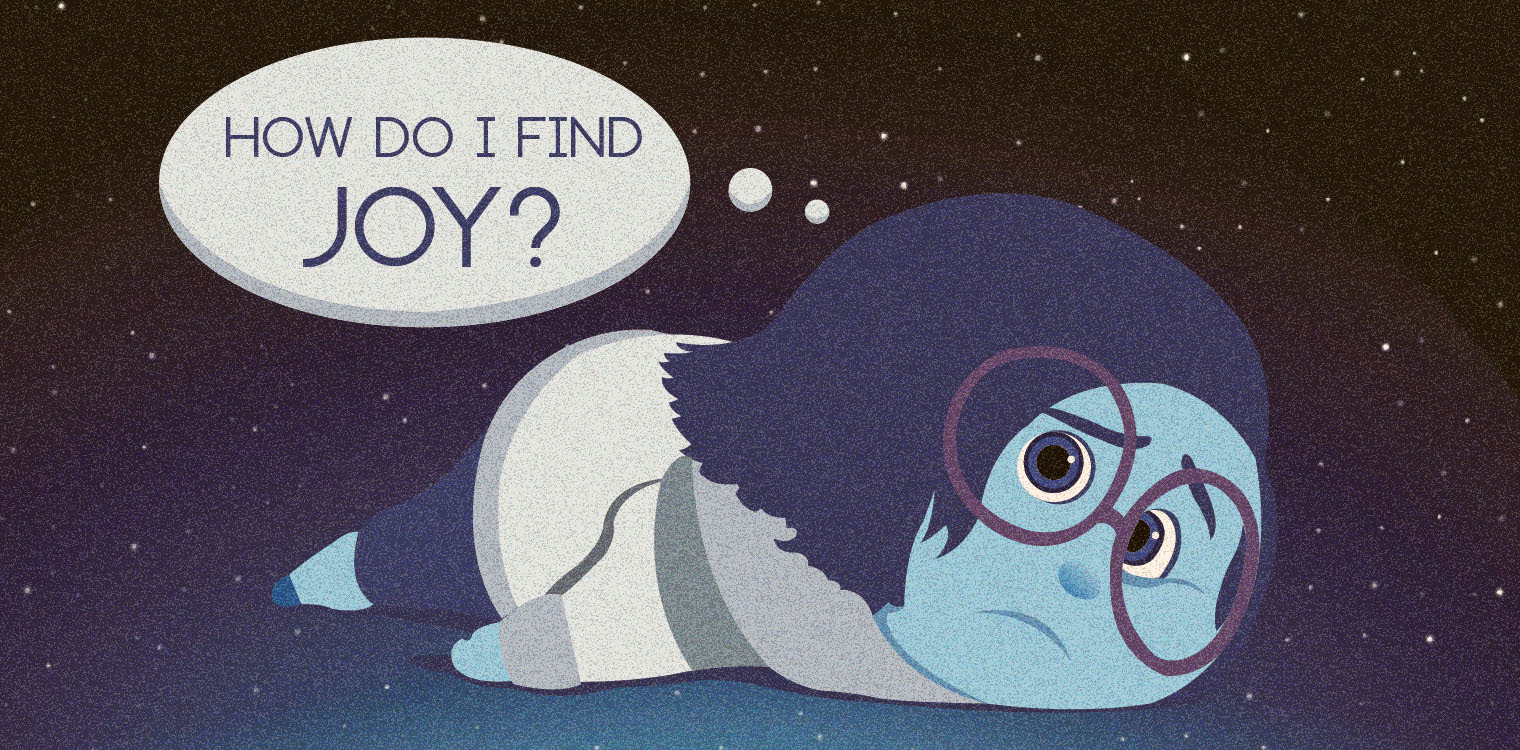
    I’d always been told that I could achieve anything with hard work. So when clinical depression hit, I decided to work my way to happiness. The idea struck when a Facebook friend took up the “100 happy days challenge”. The challenge involves putting up a happy picture, video or description for a hundred days straight. Apparently after this, your neural pathways get into the habit of ejaculating endorphins at the drop of a hat, thereby making you deliriously happy at the sight of drying paint. Now, to a guy struggling with depression, this gives me hope. It tells me happiness is like a mathematical problem. With enough pig-headedness, I could crack it like any other differential equation. I begin where all 21st century quests begin – Google. As soon as I type in “how to be happy”, dozens of articles appear, announcing “7 Sure-fire Happiness Shortcuts” and “4 Scientifically Proven Happy Hacks”. I take the clickbait hook, line, and sinker. The first blogpost I read is, “How To Turn Off Self-doubt”. I like the phrase “turn off”. It suggests the ease of flicking a switch. No lifestyle changes. Just a quick trick and bam… self-doubt be gone! The article suggests that I invent an imaginary friend for positive reinforcement. I create a girlfriend named Aisha to compliment me. And she does. She compliments everything, my splendid smoking technique, my prodigious drinking, and the sexy bags under my eyes. It makes me a little suspicious, to be honest. So I dump her and move on to newer articles. After reading a few hundred, a theme emerges. They’re all variations of the creative visualisation technique. If you’ve ever attended a yoga class, you’ll know it – “A luminous cloud of positivity is entering you with every breath. Imagine exhaling a dark cloud of negativity, and your being is now suffused with lightness and joy”. I try that and end up suffused with mind-numbing boredom. Determined to give it the old college try, I get a bit more scientific. Empirical happiness researchers have introduced a cutting edge tool to the study of happiness – The Self-report Questionnaire. Basically they ask people on a scale of one to Harsha Bhogle how happy they are at a given moment. Then they write books about the results – MUCHO books. And make money… SERIOUS money. This one guy wrote a book called, 10% Happier: How I Tamed the Voice in My Head, Reduced Stress Without Losing My Edge, and Found Self-Help That Actually Works, and then wrote a book countering that book called, Hoist on My Own Petard: Or: How Writing 10% Happier Threw My Own Advice Right Back in My Face. Anyway, according to research, positive emotion, engagement, relationships, meaning, and accomplishments increase your happiness. Everyone has a genetically determined baseline happiness. Social comparison, boredom, unemployment, and loneliness reduce happiness. So far, this is pretty obvious, right? Having learnt the theory, I begin executing practical advice from all the books I’ve read. I try watching inspirational movies, I download all the mindfulness apps and I try that old saw – being grateful about everything. I even try wearing sunglasses all the time because apparently without them you’d frown, and that sends your brain unhappy signals.

    In a society where ignorance is bliss, I decided I’d rather be a grump than Trump.
    Early one morning as I stand upside down in a yoga pose wearing dark shades while being grateful to Hitler for helping the world harness nuclear energy, I hear my internal monologue telling me I am more miserable than when I’d begun. This is too much work for too little happiness. I’m just about to begin research on mood enhancing pharmaceuticals when an idea takes form in my mind. What if the purpose of life isn’t to maximise one’s happiness? Fate delivers a book called Against Happiness: In Praise of Melancholy by Eric G Wilson. I find myself agreeing with the sentiment in one quote, “…to desire only happiness in a world undoubtedly tragic is to become inauthentic, to settle for unrealistic abstractions”. The final nail in the coffin of my happiness obsession comes while reading about a survey in the US stating that married people are happier than the unmarried, religious people happier than atheists, conservatives happier than democrats and the rich happier than the poor. It occurred to me that as a rich, religious, married conservative, Donald Trump should be the happiest man in America. In a society where ignorance is bliss, I decided I’d rather be a grump than Trump. I therefore renounce my quest for happiness hacks and surrender myself to a life of unremarkable hedonistic achievement underscored by my now constant companion – depression. And then one day on a business trip, sipping coffee and smoking a cigarette while reading a book in a café, something happens. I look up from my book feeling content. I realise with a jolt of surprise that I am happy, for no reason at all. I try to analyse the reason and I feel it slipping away. So, I pull back. It is elusive. I could only look at it sideways. The moment I focus on it, it starts slipping away again. I guess I’ll never know the reason, but I think I have achieved my peak happiness in that coffeehouse. Then of course, I tweet about it.
  • 36 B, He Wrote

    36 B, He Wrote

    On a January morning earlier this year, 25-year-old Prakash called his friend in the United States to inform him of the passing of two close companions. “Rukhsana aur Altaf ab nahi rahe,” he said. It took his friend, who had just woken up from deep sleep, a few minutes to process the information. When he realised who the people in question were, he let out a few choice expletives at Prakash, and promptly went back to sleep. Rukhsana and Altaf were the names of Prakash’s left and right breasts. Now they are no more. “They were a couple because they made love to each other at night,” Prakash explains to me with a grin. Skinny, small-framed, Prakash is still recovering from his gynaecomastia surgery when we meet. “They were a part of my life. They even looked nice on some days, because they balanced out my belly,” he says with a twinge of nostalgia. When Rukhsana and Altaf were around, Prakash hated their intrusive presence, but now that they’re gone, he seems to almost miss them. Gynaecomastia, or man-boobs as it’s commonly called, is the biggest body image concern among men after hair loss. Google search auto-completes the query “How to get rid of…” with “man breasts”, throwing up 31,20,000 results with everyone from Men’s Health to GQ weighing in with suggestions on ditching drink, losing fat, and “becoming one with the bench”. Prakash did all that and even turned to mixed martial arts three years ago to cut down on the flab. “I was trying really hard, eating all these dirtily masculine foods,” he said. “My ab muscles were getting defined, all my body fat was gone, but still I had these tits!” Prakash grew up in Patna, running on the banks of the Ganga and playing every adolescent sport from kabbadi to badminton. Even with a family history of obesity and gynaecomastia, he was never conscious of his health or appearance. In class, there was once a competition to compare who had the biggest breasts among all the fat kids. Prakash stood first. But Bihar was a different world. “People could say something like, ‘You have really nice tits,’ just the way they would tell someone else that he had a small dick,” said Prakash. “We were like street kids.” The atmosphere was comfortable, no one felt singled out. That changed dramatically when he moved to a Bengaluru art college. There, surrounded by good-looking people, Prakash was first relatively unaffected about his weight or his breasts. But the level of his body consciousness – aesthetic as well as health-wise – increased. Then, when Prakash started navigating the waters of college dating, he found it a little embarrassing to take off his shirt in front of a girl. “This one time a girl told me I could pass off as a she-male,” says Prakash. Another potential partner had a problem because she was less endowed than him. “And if you forgot for a moment that I was a man, my tits did look better than hers,” he says, cheekily.

    Male cosmetic surgery was an alien concept for Prakash and millions of other guys like him, possibly because most conversation around body consciousness is focused around the female form.
    Ironically, it wasn’t the obstacle course of his sex life, so much as his family that made him seriously consider surgery. Even though nearly everyone on the maternal side of his family had man boobs, it didn’t stop his uncle from calling attention to them. “He once said during a family gathering, ‘Ye kya latak raha hai? Isko theek karo, exercise karo.’” Prakash realised it wasn’t about health or fitness. His family was thinking of his marriage and the dowry he might fetch. Male cosmetic surgery was an alien concept for Prakash and millions of other guys like him, possibly because most conversation around body consciousness is focused around the female form. It conjures images of waif-like women, doubling over a commode, barfing their guts out. Any exposition on the subject is countered by a dozen other shrieky listicles featuring the words “plastic surgery” and “gone wrong”. Save for Michael Jackson, you’d be hard pressed to find a male celebrity in such a compilation. Finally, after thinking about the decision sporadically for four years, aided by heavy reading, Prakash decided to take the plunge. The final leap had a lot do with the fact that he could afford to shell out the ₹90,000 the surgery costs at a private facility. A government hospital would have been a lot cheaper, but then a doctor friend who worked in one, told him about a patient whose nipple went missing during the procedure. Private it was going to be. His parents weren’t exactly ecstatic about the decision. Not only were conversations about the body taboo topics for dinner-table conversations, there was trepidation about electing for an invasive surgery. Prakash didn’t care. He went alone for the surgery. Pumped with anaesthesia, Prakash slept soundly, as the surgeon aspirated the fat through inserted tubes, and deflated Rukhsana and Altaf forever. Now, more than six weeks after his surgery, Prakash is thrilled with his transformation. He is still waiting to try his new chest out with the ladies and he’s aware that things are going to become easier from now on, but he’s not fully on board with the idea of finding love just because he has a “better” body. Currently he’s too busy exulting in a world without tits that gives him the liberty to wear what he wants. “I’m just relieved I don’t have to play mind games with myself anymore,” he says.  Love and sex are all very good, but for Prakash, a nicely fitted tee is infinitely better.
  • Down With Bearded Bros

    Down With Bearded Bros

    I

    t was at the Bengaluru airport, in transit, bleary-eyed and fuzzy-brained, that the epiphany hit me like a truck. I thought I was in a movie about unreasonably well-groomed clones, because whether I looked left, right, or centre, I saw only one kind of a man. A manicured beard, hair shaved from their sides to give the illusion of a faux-hawk (that’s a Mohawk without the commitment), and shirts which were one size too small so that the middle button is as overworked as they probably are at their investment-banking, fintech, number-crunching jobs. At 5 am, perhaps due to sleep-deprivation-induced paranoia, I was about 60 per cent sure that I’d found myself in the middle of a Stormtrooper uprising, and that their Lord and saviour Darth Vader would descend upon us all at any time and annihilate our race. Or more accurately and honestly speaking, my system went into an anaphylactic shock over why I could not tell one man apart from another. We live in the time of rampant beards and man buns, a testosterone-displaying trait where a man’s purported fertility is literally on the nose. On his as well as mine, if I choose to overlook the hair and make out with the proto-hipster. But beards are to me what Donald Trump is to factual information, incompatible. I’ve tried to make my peace with them, but I have one too many unsavoury anecdotes up my sleeve to be able to move on like it ain’t no thing. For instance, one of the longest and most fulfilling relationships I’ve ever had ended when my significant other decided to give up on trying to be a functional and tax-paying member of the society and decided to pursue his hobby of getting stoned full-time as a passion. For six months after that harrowing break up, I could only associate the sight of beards with the lingering acrid smell of marijuana. But that swiftly changed for the worse, when I decided to date again. I met several specimens and their prized facial hair for dinner and drinks.

    Now I wouldn’t know how it works for non-army-background-holding, non-Catholic, convent-conditioned people, but for some strange reason, discipline is sexy to me.

    As per my limited, anecdotal experience, dinner and drinks usually went well, which gave me the emotional confidence to say, “Let’s get dessert”, because I learnt all my sexual innuendo from Sex and the City. On the way to said dessert, the bearded man would pull me close for a kiss and that’s when I’d have the sensory assault that would kill all the appetite for dessert or more. Because beards smell. And get stuck in your teeth. And scratch your cheeks. It is like chomping down on garlic-scented grass without getting the benefits of chlorophyll. And you can’t even see what’s beneath that grass. Why would I do that to myself? In a nutshell, that is the one-point allure of bearded men. That their faces smell of over-the- counter aftershave, and you will not come out of that exchange looking like you fought a coyote for shelter. Of course, the lack of a beard to me signifies a presence of so much more. It takes a certain amount of discipline to wake up in the morning, grab the Gillette razor, and shave off the remnants of yesterday from your face in perpetuity. Now I wouldn’t know how it works for non-army-background-holding, non-Catholic, convent-conditioned people, but for some strange reason, discipline is sexy to me. And so are the men who display it. There’s also the added layer of confidence that comes from a man who’s willing to let his face go into our highly judgmental times unaided by the aesthetics of a beard, which is designed to fill the gaps in your looks that genetics could not. Again, not to generalise like a un-peer-reviewed scientific study, but confidence is sexy.   Going beardless now has a certain take-me-as-I-come quality, which is very appealing in the age of Tinder, Instagram filters, and catfishing. It is that sub-textual portrayal of honesty that is as well-received as it is refreshing. That is not to say that a person who is clean-shaven cannot be a pathological liar, but they don’t give the appearance of the same, which, if you know anything of the crazy, stupid, love-laden ecosystem of modern dating, is a big win. Another big win is the fact that the lack of a beard is often indicative of a stable job, which, as a stable job-holder myself, is a relief because then I wouldn’t have the privilege of paying for this guy everywhere and becoming a single-handed champion of the feminist narrative in his life. Speaking of feminism, the beard is the greatest enemy of the female gaze, which is thriving in the throes of the third-wave feminist movement. If I put in the effort to shave my legs, wear a push-up bra that jacks my breasts up to my chin, and contour my jawline to conform to the standards of beauty, then any man I like should at least shave so that I can ascertain whether or not he has a jawline to begin with. You’re not going into this blind, buddy, all my assets are right there and decorated for effect. I will not buy into a deal where I don’t even know, behind beard, what your face really looks like. I’ve watched too much Shark Tank to make mistakes like this. If your male gaze is satiated but my female gaze is not, then what is even the point of this exercise? If I need to buy the whole pig for the sausage, I should at least get to pick the pig I want. And that pig better be clean-shaven.
  • The Wedding Detective

    The Wedding Detective

    N

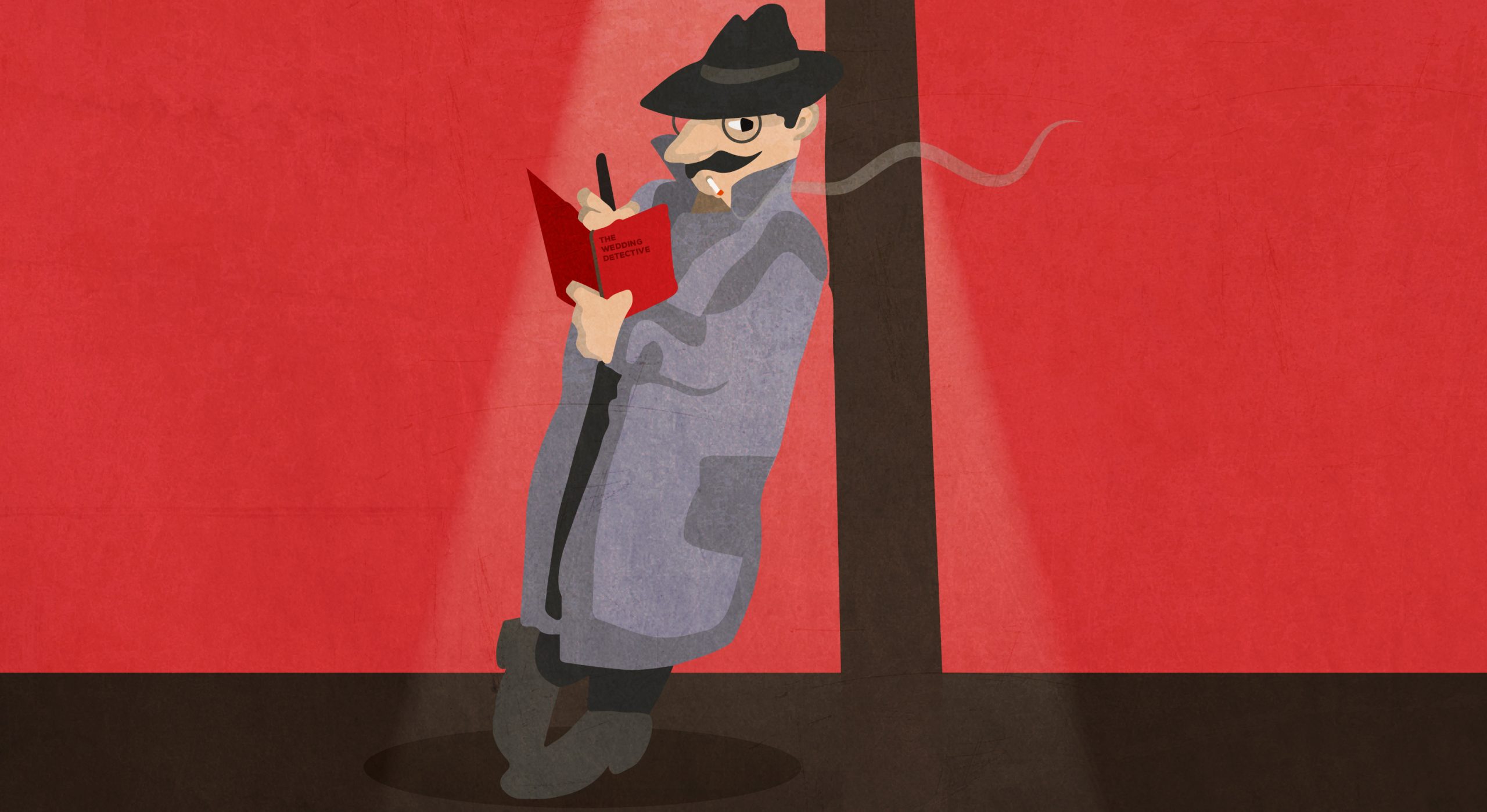
    eha* had spent the past month dreaming of the Jersey shore. She had grown up in Mumbai by the sea, but the distant American shore was all she could think about. In a few months, she would be there, with her husband by her side. Neha was engaged, her family had found her match on a matrimonial website and after a few quick meetings, the wedding was “fixed”. In the Indian matrimonial pecking order, NRIs have been the cream of the crop ever since the first man left for Canada from Punjab, more than a century ago. But in recent years, with a spate of reports about abandoned brides and swindled dowries, the bubble has burst. So, as a final check on their list, somewhere between Facebook stalking and sending out invites, Neha’s family decided to hire a private detective to do a background check on the American groom. They turned to Ranjeet Wadhwa, a detective with an international network of sleuths at his disposal, who informed Neha and her family that the NRI groom was already a suburban dad. He had a wife, and kids tucked away in New Jersey, while he was looking for a desi girl in Mumbai. Wadhwa refuses to answer more questions about the case, but he does stake claim to, “saving an innocent girl’s life”. Wadhwa has been “saving lives” for the past two decades. It started as a part-time job at Globe Detective Agencies, an institution of sorts in the world of private espionage, while he was pursuing a law degree. He soon gave up the degree to become a full-time sleuth and after ten years of that, he started his own agency. The business started to boom just as the first Indian matrimony websites set up shop, somewhere in the late 1990s. When it comes to the modern Indian wedding, Wadhwa has a front row seat to the circus.

    ***

    When I go to meet Wadha, a child opens the door and lets us in. The room has all the trappings of a middle-class home, the large image of the household’s deity of choice, fake flowers in a vase, a well-used couch. But we have just stepped into the office of one of the city’s most popular detectives. His specialty? Vetting prospective bride and grooms, before they tie the knot at a big fat Indian wedding. Wadhwa, a tall, stern-looking man dressed in a white shirt and dress pants, fits the popular image of an officer of law. But behind the curtains, which divide this office from his family home, one can hear the familiar sounds of domesticity: a child being reprimanded, the histrionics of afternoon soaps, evening tea being prepped.

    Marriages are made in heaven, but a background check is done here on earth. No one wants a private detective to burst the bubble of holy matrimony.

    Wadhwa tells me that his office rarely has visitors even though his agency handles up to 12 cases of matrimonial investigations every month. Most of the interactions happen over emails. “Pre-mat” investigators like Wadhwa have stepped into the void that was earlier occupied by the offline social network comprising extended family, friends, and acquaintances. When a marriage was arranged by a family earlier, there were many hands on board willing to help check out a prospective bride or groom (and even the feared mother-in-law). Now, when several matches in urban India are arranged over matrimonial websites, families have little to no help in figuring out the backgrounds of the people they are yoking themselves to. Marriages are made in heaven, but a background check is done here on earth. No one wants a private detective to burst the bubble of holy matrimony. But in this small room in Chembur, a middle-class burb in Mumbai, business is booming. Wadhwa has seen enough to know that the internet is one of biggest maladies plaguing modern marriages. It is too easy to create a false persona on a matrimonial website, Tinder is an accessory to infidelity, and without the checks and balances of the traditional matchmaking arrangements, which involved nosy aunts and uncles, you could be conned into a dream wedding, followed by a nightmarish marriage. Today, Wadhwa employs 12 investigators, two of whom are women. The men are used for stake-outs while the women befriend neighbours, household help, and acquaintances to dig out dirt on prospective brides and grooms. The most important repository of information, are guards and watchmen who keep an eye cocked at all the comings and goings. Household helps are invaluable in gauging the temperament of, say, a mother-in-law. _Q8A0613

    Ranjeet wadhwa’s specialty is vetting prospective bride and grooms, before they tie the knot at a big fat Indian wedding.

    Pratik Gupta/ Arré

    Wadhwa is unwilling to divulge his methods, but India’s thriving pre-mat investigation businesses employ all the tricks of the trade that can be found in a cheap detective railway read. Surreptitious gadgets, ranging from spy cameras hidden in pens and buttons, tiny voice recorders, hold the key to capturing evidence of perceived transgressions. Disguises are common in this line of work: The foot soldiers of these agencies routinely dress as beggars and household help to keep a watch on a subject. Wadhwa tells me, that when it comes to men, an inflated pay cheque is the most dreaded red flag. For future bahus, nothing turns off families sooner than being seen at a bar with an amorous man in tow. Then there is the matter of the social and financial status of the families themselves. To gauge the last, some detective agencies get their employees to pose as bankers, who make calls or meet the families and attempt to pry out information – a tactic dangerously close to those employed by phishing experts. And if a family is concerned about a prospective bride or groom’s sexual preference or fidelity, the detective agency can even set a “honey trap”. Wadhwa has left a trail of cancelled shaadis behind him, but like everything about the billion-dollar Indian wedding industry, this is a hugely profitable business. He charges ₹8,000 for a day of investigation and the average length of one of these operations is ten days. But Wadhwa believes that ₹80,000 is a small price to pay for the honest truth. Not all the people Wadhwa investigates, turn out to be liars. Some go on to get married with varying degrees of success. For those people, Wadhwa offers post-matrimonial sleuthing – when you find out that your husband is in fact an alcoholic who lied about everything. Neha’s name has been changed.
  • How Rakhi Sawant, the OG Queen of Cringe and Camp Lost Her Crown

    How Rakhi Sawant, the OG Queen of Cringe and Camp Lost Her Crown

    N

    eeru Bheda was once a typical, middle-class Maharashtrian girl from a determinedly unglamourous family. Like most middle-class Indians, the thought of Neeru becoming an actress was unthinkable, since the industry was not “for people like us”. Neeru’s family tried to thrash any such fanciful dreams. This, of course, is Neeru’s version of the story. Today, we know her as Rakhi Sawant. More than Sawant’s work in films, we are now more familiar with her antics on social media. Her most recent shenanigans include a wrestling match that ended with her being taken away on a wheelchair, a preposterous press conference where she claimed that actress Tanushree Dutta raped her at a “rave party”, and an Instagram video of her dancing in a makeshift chastity belt. Sawant regularly pops up on our timelines. And you may loathe, love, or laugh at her, but it is impossible to ignore her. Yet it’s difficult to put her in a box. She doesn’t qualify as an actress – despite her overacting on and off the screen – but to describe her merely as an entertainer or an item girl, another Malaika Arora, is not fair either. Sawant is not the Bollywood bombshell, all flawless skin and tiny waist and groomed to reek good taste, who can sit on the Koffee with Karan couch as comfortably as she sits in her own living room or on the pot. But when she did appear on Koffee with Karan, at the peak of her fame back in 2007, she immediately stood out from the mealy-mouthed, Bollywood-bred waifs who usually populate the talk show with their poise and political correctness. A bindaas Sawant spoke in Hindi, had no qualms about not being fluent in English, and spoke candidly about her extensive plastic surgeries and her experiences with the casting couch. This was the time we laughed with her, at the bizarreness of the world we occupy – not at her. Then came Rakhi Ka Swayamvar, a reality show where she chose a husband from a set of suitors, only to promptly separate from him, making it loud and clear that she was in it only for the money and the TRPs, patriarchy and societal norms be damned. Even when Rakhi Sawant made implausible allegations – her infamous “chitting” comments in 2015, when she insisted that the AIB Knockout roast was fake – it wasn’t something we couldn’t fathom. We’d come to expect this of Sawant: a fatuous yet harmless celebrity. Sure, her claims of being #BFFs with Ranveer Singh were never believable, but there was an honesty in the way she threw herself into the snooty, unwelcoming Bollywood fraternity, forcing them to acknowledge her. Her dogged refusal to conform to anyone’s idea of who she should be, and her rejection of any pretence of good taste, has always been the most compelling thing about her. After all, it’s this shameless persistence that transformed her from Neeru Bheda to Rakhi Sawant.

    Sawant regularly pops up on our timelines. And you may loathe, love, or laugh at her, but it is impossible to ignore her.

    We’d learned to love her for what she was, but something changed between her “green chilli” political party launch and her potty videos. This all-press-is-good-press mantra has taken Sawant from being a scrappy, imperfect heroine who started from the bottom, to a national laughingstock. While her confidence remains unshaken – she’s not hesitant to donate her boobs or discuss her lust for Mike Tyson on Instagram – her brand has taken a beating. She hit an all-time low when she trashed #MeToo as a foreign infiltration; she took it too far with her #SheToo bullshit, attempting to hijack a movement for some social media points. However, the greatest blow to Sawant’s stardom is that her sense of authenticity has been undermined, not just by her harmful accusations against Dutta, but also by the fact that her unabashed attention-seeking is no longer unique. Neeru Bheda, the Everywoman, only became the celebrity Rakhi Sawant by smashing the same barriers with which she was brought up. Whether it’s the perpetual weight of “log kya kahenge”, the expectation to uphold family honour and sanskar, our cultural horror of a woman getting the “wrong” kind of attention, or the idea that you have to be excellent to succeed, Sawant circumvented every deeply ingrained obstacle in her way – and in doing so, has paved the way for others. It is much after Sawant that we saw the rise of cringe-pop stars like Dhinchak Pooja and Omprakash Mishra, who are famously awful. Even the massive trainwreck value of Bigg Boss, which now spans several states and languages, stems from the popularity of Sawant in its inaugural season. Today, we see many versions of Sawant in scores of clips on TikTok, of ordinary people who seem to forego self-awareness and potential embarrassment in favour of 15 seconds in the limelight. No wonder Sawant’s space in the spotlight is shrinking, as everyone clamours to be on the same stage as her. She is the OG queen of cringe and camp, but looks like her reign is over.
  • Cauvery, Coffee, and Kannadiga Pride

    Cauvery, Coffee, and Kannadiga Pride

    Ifirst saw a mob up close way back in December 1991. This was nearly two decades before social media became the harbinger of news, good and bad, and 24-hour television and Arnab Goswami were still some years away from being the guiding light to us citizens. It was around 7.30 pm and I heard a cracking sound. Something had broken and we couldn’t figure out what. When I went to the room, I saw shards of glass all over the floor and a stone lying next to the tape recorder. Some vandals had stoned our windows and left. It was an act of random violence in which no one was hurt except our sense of security. The next morning was the first and only time I felt truly scared in Bangalore. The city had erupted over the Cauvery dispute. Mobs doing the rounds, burning Tamil signboards, stoning homes that had Tamil names, and threatening any Tamilian they could find, made headlines. One such mob arrived at our apartment. They were a bunch of vandals, nothing more, hooligans, who seemed to have found a reason to go around causing harm without any fear of reproach. A bunch of around 30 men stood on the road, threatening to throw stones. How stoning an apartment could further their cause is something no mobster will ever have an answer for. A few neighbours got together and went out to reason with the mob, but in spite of numerous pleas, they threw more stones and broke another window of my house. There was no sign of any police. Half an hour later, just like in the movies where the police enter after the damage has been done, a patrol car went around asking residents to stay indoors. That was my first and last mob encounter.

    ***

    The violence that marred Bangalore in ’91 was different from what went down earlier this week. The 1991 riots created a deep-rooted fear in the lives of Tamilians, many of who have been living in the city for years now. The anger of the locals against their neighbour was palpable. It wasn’t a good time to be a Tamilian in Bangalore back then. After the ’91 tension, a lot of people refrained from using Tamil; they were reluctant to reveal identities. My dad’s colleague Sridharan, who had a distinctively Tamilian name, changed the nameplate outside his house to Sridar, a distinctively Kannadiga one. But it’s been 25 years since that bloody riot which left 18 people dead. In these 25 years, a lot has changed. Bangalore has become Bengaluru. The city has transformed. It has ceased from being a city where you could traverse its breadth in half an hour, to a city where career decisions are taken over how much time will be spent in traffic. It has changed from a city of mainly Kannadigas and Tamilians to being home to people from all corners of India, lured by high-paying jobs, fancy pubs, spacious homes, and good weather. In these intervening years, as the city stretched and pulled itself to accommodate the “outsiders”, the physiognomy of Bangalore changed and a wholly cosmopolitan countenance evolved.
    But in all this stretching and integrating, coexisting and compromising, something had to give way – in this case, it was the patience of the local Kannadiga, who is slowly losing his identity.
    This countenance was a gracious one. It did not impose its ways and its language upon you. The city allowed you to get by without knowing a word of Kannada. Auto drivers, conductors, shopkeepers picked up rudimentary Hindi, others spoke in English. Tamil, Telugu, and Hindi films dominated the entertainment landscape. All of this is vastly different from culturally snooty places like Chennai where the Tamil identity rules the land, the language, and the expression. As a Tamilian, I know how we expect outsiders to make an effort to integrate into our milieu. There’s not an iota of chance to change ourselves for the the outsider. In all of my 30 years in the city, I have never felt remotely conscious of my Tamil identity, I have never compromised because of it. After I go for a run, I alternate between going to Adyar Anand Bhavan, a chain that had its restaurants attacked when the violence broke out, to get my fill of Tamilian-style sambar, and Mysuru Coffee Thindi to get my share of Kannadiga-style sambar. Both sambars coexist happily in the city. But in all this stretching and integrating, coexisting and compromising, something had to give way – in this case, it was the patience of the local Kannadiga, who is slowly losing his identity. Hence, the demand for bus signboards in Kannada. Hence, the demand for prioritisation of Kannada films over others. And there’s nothing outrageous about this demand. Be it Chennai or Ahmedabad, be it Thiruvananthapuram or Guwahati, the local language and everything associated with local tradition and culture is in your face. Without the knowledge of Tamil, you can’t survive in Chennai. Without knowing Assamese, you can’t bargain in the fish markets of Guwahati. Is loss of identity a price you pay for cosmopolitanism? Beneath the veneer of its numerous monikers – start-up city, IT city, and pub crawl city – there is a “local city” with a mildly disenchanted populace that seeks to reinstate its statehood, assert its origins, whenever the occasion presents itself. Cauvery is only one such occasion. Though on the surface, the events of the last two weeks may resemble the violence of ’91, they don’t. The mobs this time resorted to random acts of violence that wasn’t so much about attacking Tamilians than about giving Kannada the importance that it should be given. Water is not at the heart of this unrest, neither is the cultural face-off between Kannadigas and Tamilians. At the heart of the issue, is local pride and identity. And I, a Tamilian, think it deserves to be preserved.
  • The Stoic Struggle of Being Gautam Gambhir

    The Stoic Struggle of Being Gautam Gambhir

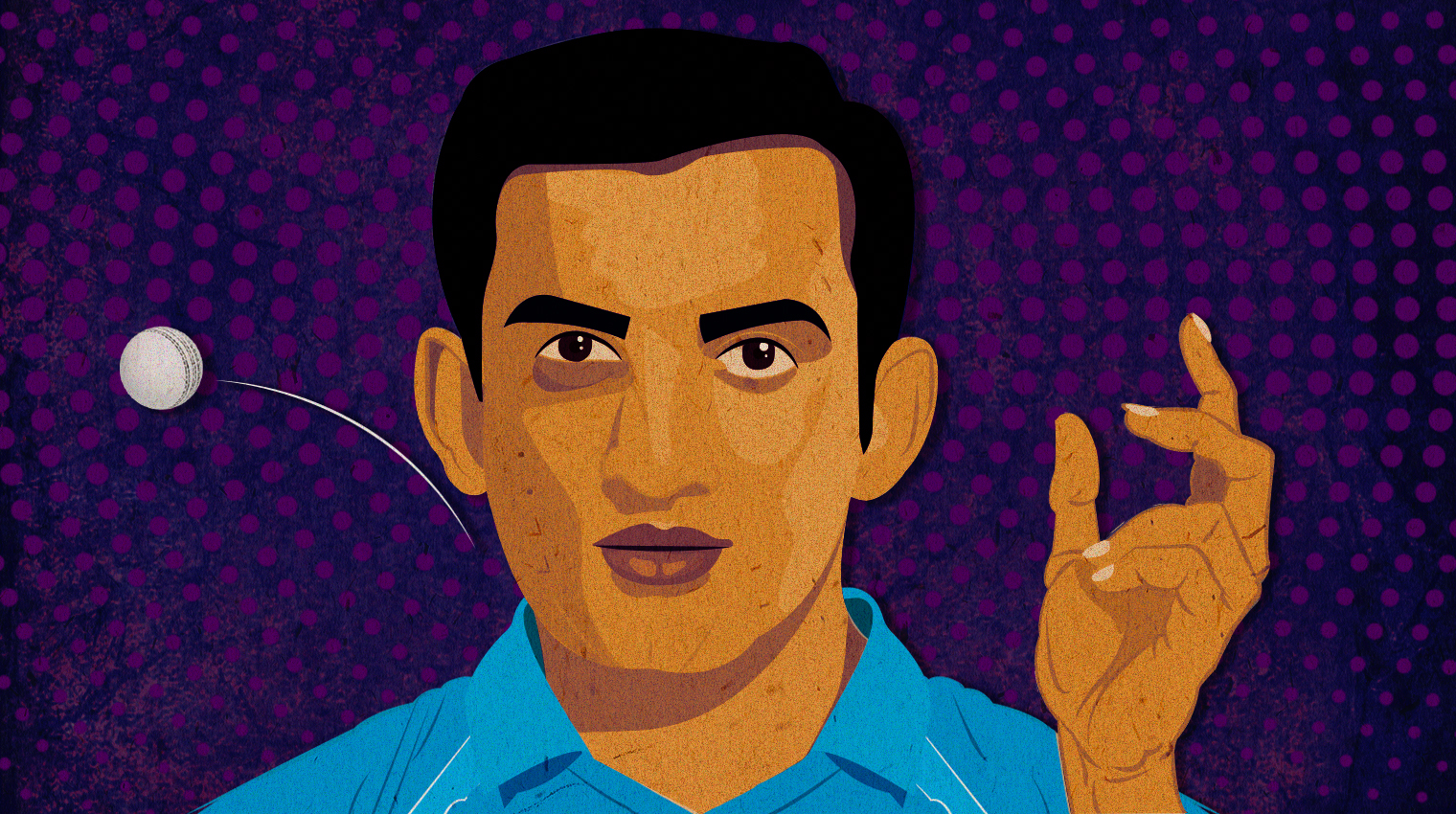
    On a cloudy day in July, my eleventh-grade physics class was disrupted by rumours of Indian cricketer Gautam Gambhir coming to our school. Of course, my friends and I found our way to the basketball court. There, on a podium, in the middle of the court, with some media members and sixth graders forming the audience, Gautam Gambhir revealed the trophy for the first ICC World T20. Gambhir, still close with the cricket programme of his alma mater, Modern School, had recently replaced Virendra Sehwag as captain of the Delhi Daredevils, and had returned to his old stomping ground for his first major public appearance since the announcement. A rather routine, dull presser was followed by the excitement of a major scuffle. The kids in audience went loco for autographs in the pre-selfie era. There was a crowd of sixth graders and older girls chasing him to the parking lot. I stupidly tried to play the cool, distant type, but the rest hunted him down to his car, where he signed some Daredevils paraphernalia before being whisked away by Amit Mishra in a bottle-green Maruti Esteem. My sister managed to score an autograph, which she gave me. I put it in a drawer and forgot all about him, much like the country. *** Yesterday evening, the stoic southpaw called time on his 15-year-long career, retiring from all forms of cricket. He had been neglected by national selectors in recent years, and has always been the kind of player to know when his time at the crease is up. Declaring retirement on his own terms is an act of self-discipline one has come to expect from Gautam Gambhir, a man who has spent his entire playing career shining while the spotlight was directed somewhere else. When Gautam Gambhir debuted for India in 2003, he was a stylistically odd cookie – an opener who struggled to protect his off stump against fast bowling, but dominated spin bowlers. When it came to batting, his record was inconsistent. At times, he was a classicist with the decorative left-hand cover drive, but his authoritative pull shot showed aggressive, modernist tendencies. He was also a curious character, not visibly partaking in many team celebrations, showing little to no emotion, always operating in isolation, except for the now famous spat with Shahid Afridi in 2007, which became viral on YouTube and is aptly titled

    Afridi vs Gautam Gambhir… full maa bhen.

    India made 157 in the final against Pakistan in the ICC Twenty20 World Cup in 2007, and Gautam Gambhir made nearly half our runs.

    Photo by Duif du Toit/Gallo Images/Getty Images

    It was only in the first T20 World Cup in 2007, when greats like Sachin Tendulkar, Rahul Dravid, and Sourav Ganguly were “rested” that younger guns like Gambhir and Rohit Sharma came to the fore and won the inaugural competition for us. However, Gambhir was left out of the plaudits, even as songs were written about Dhoni, Yuvraj, and the perennial trivia question, Joginder Sharma. Fun fact: India made 157 in the final against Pakistan, and Gautam Gambhir made nearly half our runs.
    To this day, Gautam Gambhir remains the only Indian batsman in history to score over 300 runs in four consecutive series
    I first fell in love with Gautam Gambhir in early 2008, when India played Australia in Australia. The new and improved Gambhir was displaying the full gamut of his arsenal against the best in the world. We were chasing 317; Sachin went for 2, Sehwag for 17, Rohit for 1, Yuvraj for 5, but Gambhir was toying with the then famed Nathan Bracken, nudging for the ball, and took single after single unperturbed by the fall of wickets around him, finally comfortable in his isolation. He made 113 runs that day. We beat Australia in the finals of the CB Series 2-0 with a Sachin ton, and Praveen Kumar swinging the bejesus out of Ricky Ponting. Sachin casts a shadow larger than anyone in the sport, and this time it was even more special as we had won an ODI series in Australia for the first time. The unassuming Gambhir, the highest run-scorer in the series, was again forgotten.

    Our Gambhir-blindness peaked in 2011, in the final of the World Cup in Mumbai.

    Photo by Santosh Harhare/Hindustan Times via Getty Images

    India’s cricket faithful developed this clear arrangement with Gambhir: Because you’re not as charismatic to watch as Sehwag or Yuvraj, because you’re not in as many ads as Dhoni, and because you’re not Sachin, Rahul, or Sourav, we don’t give a fuck. Funnily enough, nor did Gambhir. He brought his Australia form home, scoring the most runs in the Border-Gavaskar trophy, despite not playing the last game. He then ended the year with being the top scorer in the England series too. He carried it over to New Zealand in early 2009. On the back of two hundreds from Gambhir, India won a series for the first time in New Zealand in 41 years. To this day, he remains the only Indian batsman in history to score over 300 runs in four consecutive series. India might not have noticed, but the world did, with Gambhir being named ICC Test Cricketer of The Year in 2009. Our Gambhir-blindness peaked in 2011, in the final of the World Cup in Mumbai. Like he did in 2003 in South Africa, Sachin failed once more with a tiny 18. Sehwag was too cavalier for his duck, and Virat Kohli was still a baby. With the team and a country becoming ash around him, Gambhir made a quiet, unassuming 97, the rock upon which we built our win. We remember that Dhoni six, Yuvraj’s all-round brilliance, and Zaheer’s magnetic around-the-wicket mastery. Even the most famous photo from that night at Wankhede is that of Sachin on the shoulders of our team, a quasi-lifetime achievement award, when it should’ve been Gautam Gambhir standing in the middle, like he has in so many big moments – all blood, sweat and tears, and victory. The only way we think of him now is in disgust or glee, depending on your political bent, due to his recent tweet storm on Kashmir. His desire to join politics is well known in Delhi, and joining the bhakt bandwagon is a highway to #TheGoodLife (just ask new FTII chairman Anupam Kher). Beneath the controversies though, Gambhir remains the most clutch Indian cricketer in history. If we were to write the history of Indian cricket up until now, Gautam Gambhir should be mentioned in the first paragraph, instead of being a footnote. He belongs alongside CK Nayudu, Kapil Dev, Sachin Tendulkar, and MS Dhoni for being our most cold-blooded killer, the man who gave India unarguably its two biggest wins, and broke the taboo of winning down under. Gautam Gambhir, then, is the quintessential nice guy who finishes last.