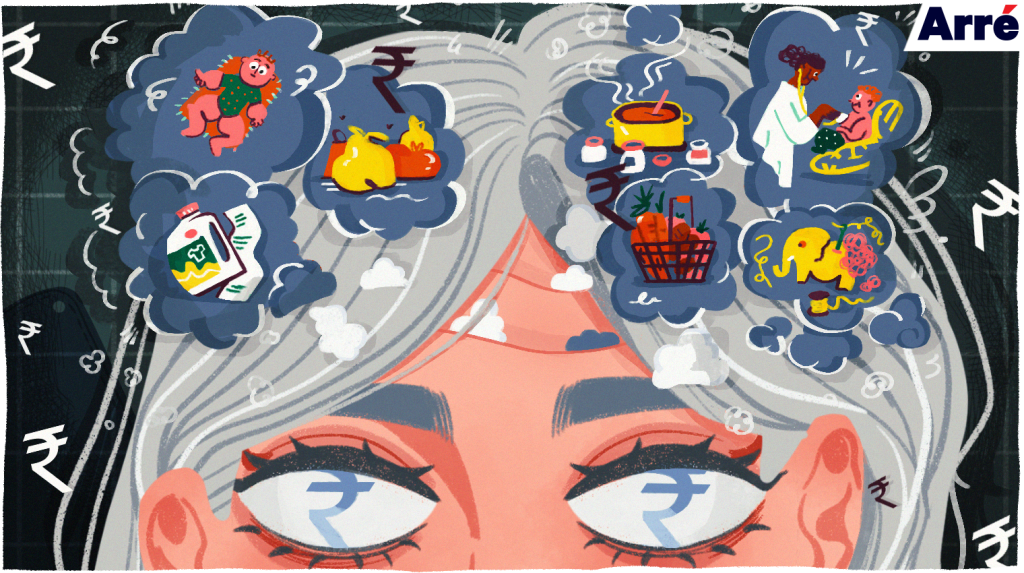

Thanks to a Supreme Court statement made on Tuesday, the national discourse on the issue of homemakers has once again come to the fore. The SC was hearing the case of a couple who were killed in a motor accident, where the relatives believed they were given less monetary compensation due to the woman’s status as a housewife. Justice Raman affirmed their views, saying, “Women cook, buy rations, clean the house, take care of the furnishings, maintenance, and take care of children and elders. Despite all this, the thinking that homemakers do not work and do not provide financial help is wrong. It is time to get out of this thinking that has been going on for years.” Congress MP Shashi Tharoor took the opportunity to agree with Haasan’s idea of providing a salary to housewives on Twitter. Naturally, no social media discussion is complete without the opinion of actor Kangana Ranaut, who derided the prospect of a salary for homemakers as “partially painful and partially funny.” Ranaut insisted that there was no price one could put on the sacrifice and lifelong commitment of mothers and wives. “Don’t put a price tag on sex we have with our love, don’t pay us for mothering our own, we don’t need salary for being the Queens of our own kingdom,” she said. It’s worth noting that Ranaut is a successful and wealthy career woman who faces none of the restrictions that the typical housewife does, prompting Tharoor to respond with a wish that all Indian women are as empowered as her. The language Ranaut uses to glorify the condition of the homemaker is not so different from the statements made in the SC, or by politicians who laud them as personifications of our Bharat Mata. But the conclusions drawn by each are miles apart. Based on what women have been facing for decades, including dropping out of the workforce under the weight of maintaining their households and families, praising them as queens of their realms is clearly not enough. And this number has only risen during the pandemic. According to research at the Centre for Sustainable Employment at the Azim Premji University, work participation rate for women – a measure of the proportion of adults who work – fell from an already low 9.15% in December 2019 to just 5.8% in August 2020.Even in educated households, patriarchal mindsets persist as men tend to take little responsibility for chores and childcare.
There is a strong case for housewives being compensated for their work, to empower them and make them financially independent. The question, however, remains about who would pay? In 2012, the then Women and Child Development Minister Krishna Tripathi had proposed that men should compensate their spouse for the chores done. But that again puts the onus on the women and makes the man the “owner”. The other option as Tharoor references in his tweet would be to create something close to a Universal Basic Income apart from acknowledging their overlooked contributions. Perhaps in the times when we were still schlepping to office every day, these would have seemed like pie-in-the-sky policies. But after a crisis year where we have seen the economy tumble and jobs vanish even for the middle-class, where we’ve been forced to do some of the hard work of running a house, formerly radical ideas start to sound like common sense. COVID-19 has helped us recognise the true value of housewives’ domestic labour that has kept us going when the whole world ground to a halt. It’s heartening that the SC along with politicians like Haasan and Tharoor are finally showing appreciation for homemakers not just for being selfless wives and mothers, but for their unsung economic power. Maybe it’s time to go beyond platitudes, maybe it’s time to pay salaries for housework.Based on what women have been facing for decades, praising them as queens of their realms is clearly not enough.