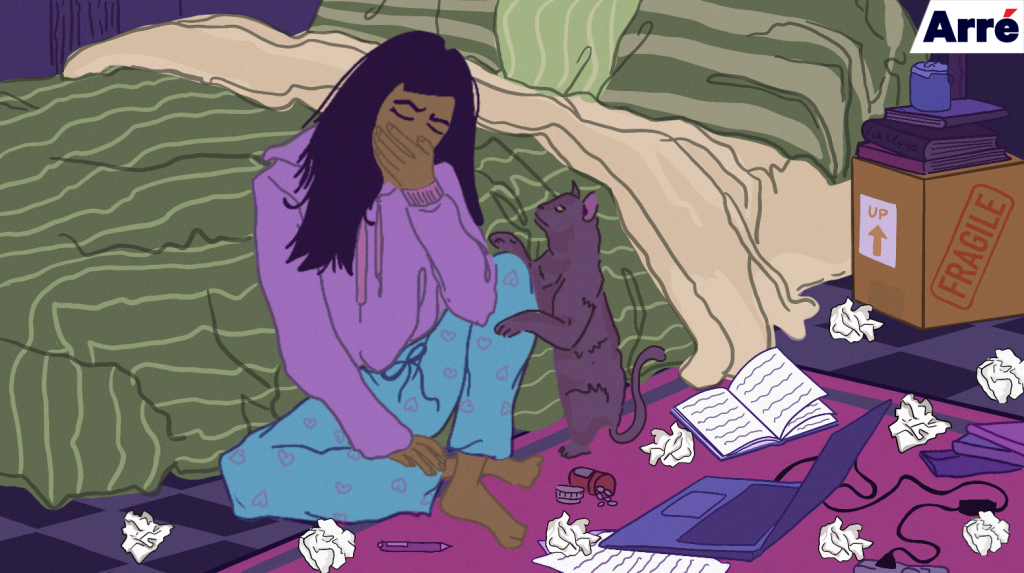

The trouble, as another member, a poet and journalist, pointed out, was that the artistic community and its audience did not see their tragic lives as a problem. As most creative minds in my close circle keep repeating, heartbreak is a bestseller. The fact that it may come at the cost of an artist’s life has always been of little significance. A couple of years ago, I had the misfortune of attending a session by a casting director. He spoke with great pride about a young boy whose ego they had systematically cut to size to fit the requirements of a role. That in the process they most probably permanently damaged the guy’s self-esteem and psyche was irrelevant. The exploitative tendencies of industries that thrive off creativity are pretty much an open secret. Which is par for the course with almost any industry that relies on human capital. The only trouble with artists is that they often become accomplices in their own exploitation, truly believing it to be the only path to supposed greatness. There is a scene in Imtiaz Ali’s film Rockstar that has stayed with me. The record-label owner Dhingra (a brilliant Piyush Mishra), gets news of Jordan’s (Ranbir Kapoor, in one of the finest performances of his career) arrest. He gleefully turns it into an eye-grabbing poster – with jail bars, no less – for the next album which he accurately predicts to be a sure-shot bestseller riding on the misfortunes of its troubled star. Rockstar is one of the rare contemporary Hindi movies that looks beyond the success of an artist, delving into their life’s ugly realities. Hollywood, of course, has a long tradition of such movies that range from biopics like Frida and Bohemian Rhapsody to more fictionalised tales like Whiplash and A Star is Born . There have also been more oblique references to the idea of an artist being a madman as in The Shining, and in a rather twisted way, in Bradley Cooper’s Limitless. Not just movies, David Duchovny’s Californication was a TV series that attempted to satirise, with varying success, the trope of a “troubled writer” by stretching it to a comically painful extreme. In India, we have had Aashiqui 2 which was largely lazy, stereotypical and painfully tropey. But we also have classics like Abhimaan, Kabhi Kabhie, and in its own sweet way, even Guddi, that actually take a very real look at the cost of being an artist. None of these movies however take an approach as immediate and encompassing as Rockstar which actually factors in truths that tend to be glossed over: Corporate greed is not the only thing it gets right. There’s also the loneliness, obsession, frustration, exploitation, broken families, substance abuse, paparazzi, and blinding ambition, Rockstar had all the elements in place.As most creative minds in my close circle keep repeating, heartbreak is a bestseller.
The first time I watched the movie, I was going through a difficult time in my life, struggling to find a balance between my personal life, professional compulsions, and artistic ambitions. Jordan’s ambitions resonated with me as much as his struggle to find his feet in a world that refused to understand him. His frustrations and helplessness echoed my own, and in a way seemed cathartic. The idea that we were all doomed to suffer seemed strangely comforting, a kind of escape that allowed me to get away from finding any real solutions to my own problems. In a world where artists dying at 27 is a legitimate phenomenon, where the likes of Avicii and Chester Benington continue to be the victims of their own greatness, the failure of our films and books to address the real issues behind stardom – rather, valorising that sadness – seems even more problematic. Popular culture, after all, has the power to influence aspiring artists in more ways than we can imagine. I lost the angst I was wallowing in when I first watched Rockstar almost a decade ago. I went from being endlessly fascinated to endlessly worried about everything the movie stands for. Irrespective of the struggles that I faced as a writer, one thing became very clear to me – any amount of material or artistic success that I might find will become entirely pointless if I was fundamentally sacrificing myself at the altar of great art. As one of my WhatsApp group members said in conclusion of the ongoing discussion, we shouldn’t need to believe that our supposed greatness will always come at the price of our happiness. And if it does, is that really greatness or is it an illusion of it?Popular culture, after all, has the power to influence aspiring artists in more ways than we can imagine.