
B
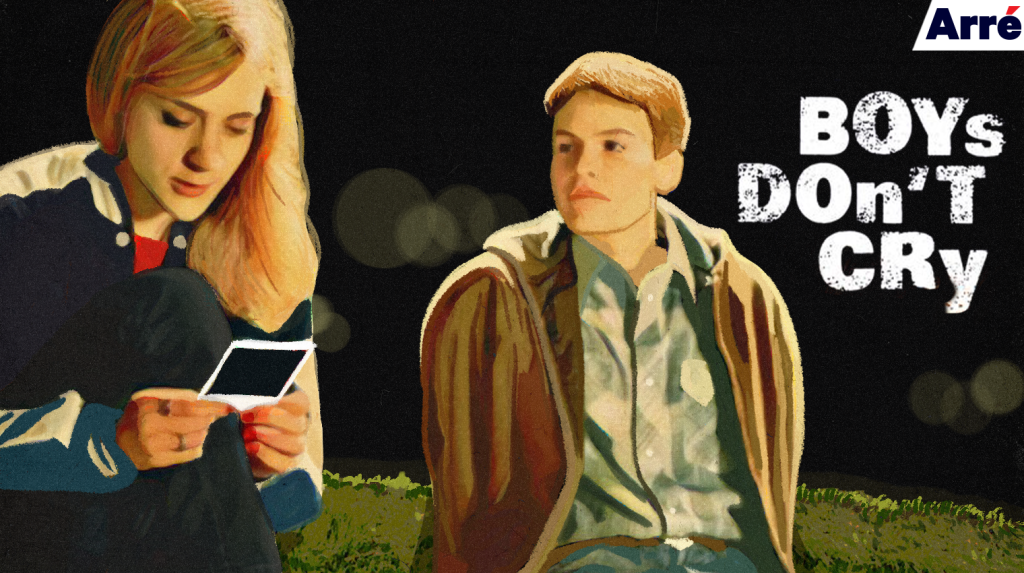
ack in 1999, when Kimberly Peirce’s debut film, Boys Don’t Cry released in America, it managed to mainstream a conversation that was often silenced in a world habituated to heterosexuality. It was arguably one of the first commercial films that threw light on the trans community: Based on a true story, it traced the life of a trans man, who was gang-raped and murdered in 1993 after acquaintances learnt of his identity.
Twenty years later, when I watched the life of a 21-year-old Brandon Teena (born Teena Renae Brandon) play out on screen for the first time, I had my reservations about Hilary Swank, a cis straight woman essaying a trans man, aware of the complications of representation that it entailed. Less than 10 minutes into Boys Don’t Cry, my apprehensions had almost vanished. I felt that the actress – sporting a sharp jawline, boyish hairdo, and men’s clothing – convincingly projected the anxieties of a trans man who outwardly wanted to fit in even when he didn’t question his identity himself. Swank’s evocative turn made it clear as day that Brandon Teena was a young male born into a female body, who couldn’t afford an expensive sex reassignment surgery but craved to be seen by the world exactly as he saw himself. In the film, Brandon finds a glimpse of this acceptance or an illusion of it, when he moves out of Lincoln, Nebraska with three complete strangers. Brandon’s spontaneity was presumably an integral part of his personality. It’s this very trait that led him to Falls City where Teena Brandon ceased to exist, birthing a smitten Brandon Teena who meets Lana Tisdel (Chloë Sevigny) and pursues a pivotal romantic relationship with her.
For me, it’s the scene when Brandon and Lana get intimate that spoke volumes about the film’s intentions. Lana remains silent when she notices Brandon’s taped chest, as if saying, “I don’t exactly know your story but we’re in this together now… nothing else really matters.” Something about the moment felt so concrete, like an assurance that there is somebody out there who will care and love you for who you are; who will not demand that you hide yourself. It’s a feeling best articulated in a scene where Lana declares her love for him even after Brandon tries lying to her, telling her that he was born a hermaphrodite.
Even with its flaws, Boys Don’t Cry bore the burden of a torchbearer for depicting an oppressed and underrepresented group of people. Hart-Sharp Entertainment/ IFC Films/ Killer Films
Even then, it’d be unfair to apply a 2019 lens to the movie. Even with its flaws, Boys Don’t Cry bore the burden of a torchbearer for depicting an oppressed and underrepresented group of people. It picturised a horrifying act of hate crime that a layman may have necessarily not heard of and gave voice to a community that was often silenced, that had no representation at all. Despite the criticism, Swank herself, is proud of the movie, even now. In an interview, the actress acknowledges the criticism against the film but also argues its necessity. “…if people knew the outpouring of letters and people on the streets who have come up to me in tears, thanking me for telling their story… I hold on to that,” she said. Riki Wilchins, the founder of GenderPAC, offers another argument in favour of the film’s existence in a WUMM essay, “It’s not fair to go back and apply standards 20 years later that didn’t exist back then. What she [director Peirce] did is a major, major accomplishment. It legitimated and made possible all of these other representations that we’ve had since.” Twenty years since, perhaps that is the legacy of Boys Don’t Cry. In the time we live in now, you either love a film or you hate it; a film can either be good or bad. Rarely do we see beyond that. In that sense, Boys Don’t Cry is a reminder of the middle ground, that makes it possible for a film to have two sides to itself: It can be flawed while pointing out a systemic flaw. Boys Don’t Cry does exactly that.Boys Don’t Cry is a reminder of the middle ground, that makes it possible for a film to have two sides to itself: It can be flawed while pointing out a systemic flaw.