
T
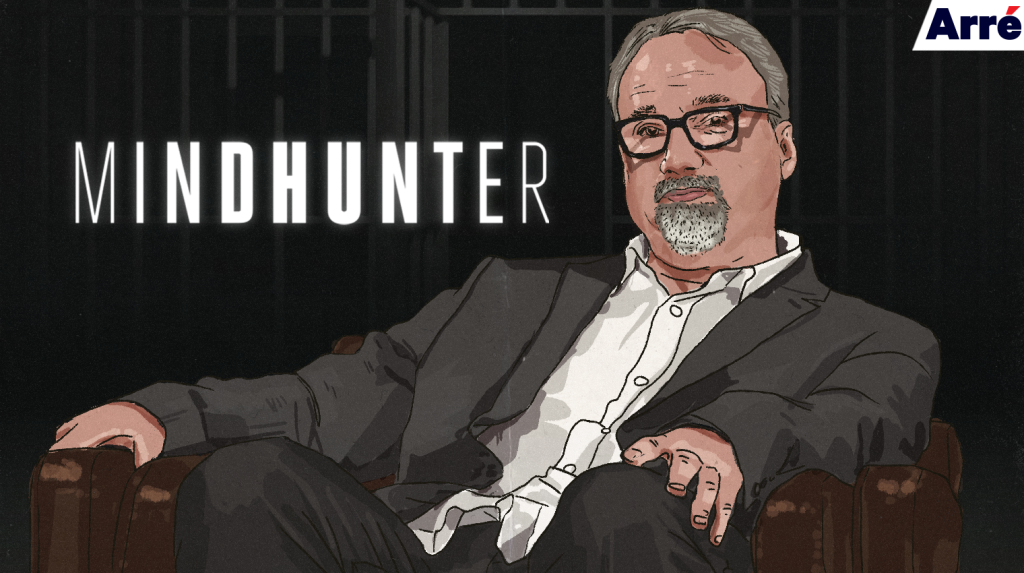
he opening credits of David Fincher’s Mindhunter, the true-crime series that is now streaming on Netflix, are as unsettling as the series itself. We see close-ups of a tape recorder – the instrument of inquiry used throughout; sombre music plays in the background; a couple of seconds in, an image comes and goes in a flurry and then similar images appear in an ephemeral blur. We can’t quite figure out properly what these images contain. We don’t need to. Our mind registers small details and joins the dots for us: a bloody hand here, deep skin gashes there. Bit by bit, we form the complete image of a rotting corpse.
That we don’t see any image for more than a fraction of a second, but still see it, can feel impossibly uncomfortable. But then, eliciting discomfort from viewers is an art that Fincher has mastered over his decorated film career. Unlike House of Cards, the other big Netflix TV series that he was involved in, this time around, Fincher takes up a chunk of directing duties (he directs the first three of the second season’s nine episodes and directed four episodes in the debut season) and leaves his fingerprints on the whole series. The result is a show that swaps gratuitous violence and gore with conversations about it. The result is horrifying and suspenseful in equal measure.
Mindhunter charts the evolution of a unit of the FBI that specialises in profiling criminals that have committed multiple murders, aka serial killers. Based on the lives of real special agents, the reel version condenses several such investigators into two principal characters: Holden Ford (Jonathan Groff) and Bill Tench (Holt McCallany). We follow Holden and Bill as they travel across the US, talking to convicted serial killers and analysing transcripts to better understand the mechanics of minds they believe are designed to crave killing. This basic premise slots right into Fincher’s wheelhouse.
Mindhunter charts the evolution of a unit of the FBI that specialises in profiling criminals that have committed multiple murders, aka serial killers. Netflix
It helps that Fincher’s legendary affliction for precise camera movements is on full display in this season of Mindhunter as well. His camera follows the characters in almost perfect harmony. What this deliberate cinematography does is that it registers even subtle changes in a character’s movement, heightening our understanding of them: We keenly feel the hesitation in a suspect’s face and sense the nervousness in a junior investigator’s first foray into prison. The director supplements it with a unique soundscape that comprises effective sound cues. Scenes with Bill Tench thinking about his child are accompanied by a sound akin to a guttural cry of an unknown creature or a skewed violin string. Then there is the show’s soundtrack, which is a character in itself, throwing you off track by being rushed in a scene of supposed calm and at other times, becoming slow at a time of dread. Fincher’s outings have had a history of having persuasive soundtracks that always accentuate his visual storytelling and Mindhunter is no different; here sound is often stressful, eerie, and unobtrusive. Perhaps the most succinct distillation of Fincher’s filmmaking philosophy came in an interview when actress Anna Torv, who plays Dr Wendy Carr in Mindhunter paraphrased Fincher, “I don’t want a distraction until I want it.” It makes complete sense: After all, when Fincher’s camera hijacks our eyes, his audio hijacks our ears, leaving us constantly uneasy and terrified of what we don’t hear and don’t see. In doing so, Fincher also hijacks our mind in Mindhunter.With Se7en, Zodiac, and Girl with the Dragon Tattoo, Fincher has proved himself to be one of the best genre filmmakers in the last two decades.