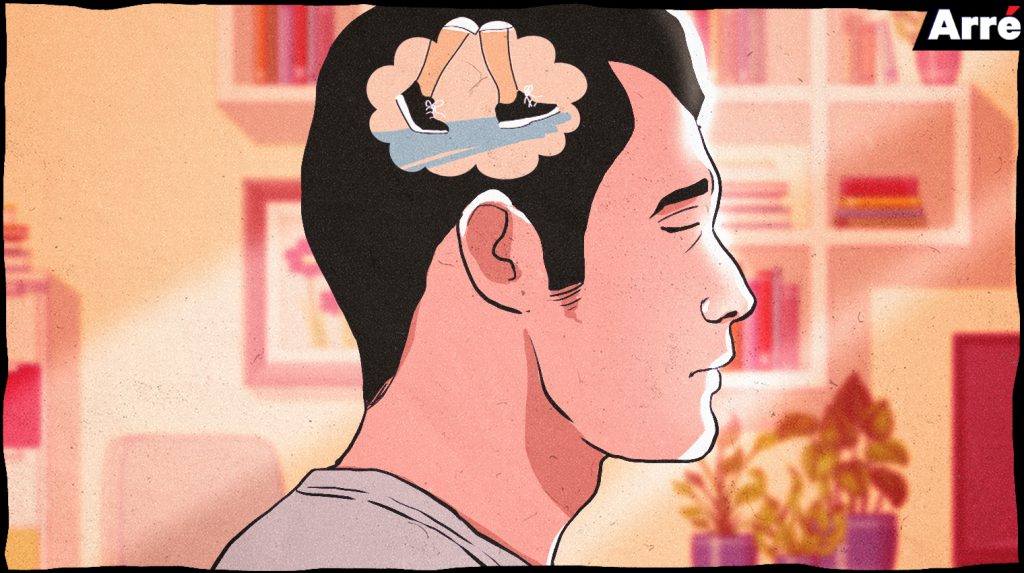

Setting aside the socio-economic aspect of things for a moment, walking has always been a form of therapy for me. I’m not talking about exotic hikes or stuttering treks that people have or at least display an acute passion for. I’ve done those, but never felt the need to greatly exaggerate their virtues, at least not on social media. I’m talking only about walking in free, open spaces, regardless of what’s around. I love exercise but I repeatedly struggle to commit to the confines of a gym. It just doesn’t feel natural, to walk, and not go somewhere, or move in terms of space. Also, the time-tutored nature of exercise is too mechanical, too goal-driven to feel organic. In comparison, walking feels like an ideal way to flex both, the brain and the body where the strings of want, desire, and desperation are untied and thrown away in favour uneventful yet effective, freedom. Especially, the widely popular and a personal favourite, the morning walk. It’s slow and moderate spend of energy, coupled with allowances for casual rumination that has always been my way of having an argument with myself. Simply put, when I am stressed, I walk. Now that I can’t, the inability to do so feels all the more pertinent and crucial. It’s largely an urban notion, and an unfortunate consequence of lethargy becoming sandwiched between privilege and power that walking has become a remedial exercise. That it is to be undertaken mostly by the old, or the unwell. Most people my age won’t walk 100 metres to buy groceries but will calculate their “steps” on their FitBits in the office. The pleasures of walking the streets, through the unexplored corners of the city, of its ancient ruins have been criminally unadvertised.All I have now, are walls, and walking between them is only for the body. My mind waits to wander outside.
There remain certain exceptions, like heritage walking tours, photo-walks, but even those, sound too busy or unnecessarily coupled with price or purpose. The simple act of arbitrarily walking and taking in the mundanity of your surroundings and juggling with it, random thoughts you would otherwise need reminders to have either been defamed or diverted for gain. Henry David Thoreau wrote in his long essay titled Walking: “The walking of which I speak has nothing in it akin to taking exercise, as it is called, as the sick take medicine at stated hours… but it is itself the enterprise and adventure of the day.” Even though I’ve used the word, I wouldn’t want to restrict walking to the applications of therapy and therefore mental stress alone. To me, there is no better way to learn about a place without walking its streets, or studying its corners, be it for the arbitrariness of the architecture or the spittle that no corner in India feels homely without. When you walk you are part of the space you want to cross, stare at, or study. Similarly, walking can also be an effective exercise in unlearning, helping clear boxed minds and moods by supplying them with common observations and interactions that act as mitigating elements to the intensity of everyday pressures. It never struck me, however, when the lockdown began, that when the need would arise, the thing I’d have instinctively turn to for distraction, or momentary purposefulness, would not be available. All I have now, are walls, and walking between them is only for the body. My mind waits to wander outside. When it finally gets to, it may not want to return at all. I am going to be okay with that.Setting aside the socio-economic aspect of things for a moment, walking has always been a form of therapy for me.