
I
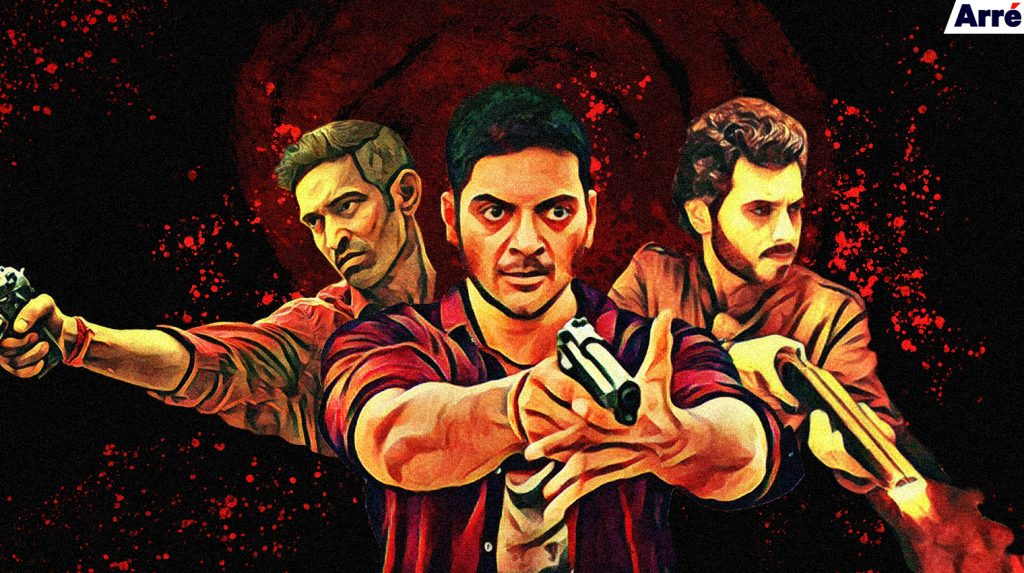
n the third episode of the Amazon Prime series Mirzapur, Ali Fazal’s Guddu exclaims, “Sabse chutiya qaum hoti hai baap ki.” The crispness of Guddu’s statement at that point, its low-handedness, cut through the visual barrier and grinned at me like a fitness coach telling a crude joke – it’s kind of true, but don’t say it out loud. Not for nothing were India’s men – raised as poorly as they were assigned role models (father figures) – looking to hide in the wake of #MeToo revelations. Mirzapur is filled with similar characters only rawer, closer to the soil. The series swims ear-to-ear with witticisms throughout, assuaging doubt with the kind of rugged philosophy that only a country at odds with modernity could offer. The show’s frothy mix of hate, aggression, and masochism may feel distant to the urban viewer at first. But it grows on you, kind of like the climate of violence and villainy that has grown on us in the last few years. There are no heroes, there never were, this moment is trying to tell us. Mirzapur is set in the real town of Mirzapur, Uttar Pradesh. Much like the soreness that warms its masculine pulse, its scrotal girth, the series’ echoes of manhood feel all too real as well. The show has at its heart an outrageously graceful Pankaj Tripathi (King of Mirzapur, he is called) as Kaleen Bhaiya. Around him an assembly of solid actors emit performances that, though weighty, can also feel familiar. These are stock characters: A petulant and privileged son; a hammer-headed vagrant; his meekly built brother; a loyalist; a lone moralist, and so on. Kaleen Bhaiya runs a carpeting business as cover for his actual work of manufacturing kattas or desi guns. The show has women, but largely carved through the imagination of men, eroticised and then sidestepped for sake of the action.
It’s a man’s world, alright, and perhaps that here is the point. More than anything, though, it’s Mirzapur’s violence that seems uncomfortably close. The show’s lip forever drips with blood, its texture permanently imprinted with sprayed guts. But hardly any of it surprises; in fact, it oddly feels like a subtext of present-day India, rotten yet pure. Subconsciously, perhaps, it is this violence that tugs us toward shows like Mirzapur, AND toward its most violent men. Our most important debates, our biggest nightmares as a country in the last few years have originated in the India’s morgues, in death, in loss. The many lynchings of Mirzapur is nothing but the face of India’s violent core. Good guys don’t last in memory, but they probably don’t last a day in reality. Our news feeds are assigned to clutch at poison. From our reality shows to our fiction, violence – verbal or otherwise – is programmed to pluck the fattest pigs dropping out of the sky, the ones that will make the loudest noise when they eventually hit the ground. Similarly, Mirzapur isn’t high art, but for each of its fingers that either grease the insides of a trigger or the outside of a woman’s bra, it feels ceaselessly entertaining. All because its characters bring alive things we subconsciously refuse to recognise.As long as we keep defining savages as others – not as ourselves – our Netflix and Prime accounts will continue to make us feel elevated, untouched.

The show has women, but largely carved through the imagination of men, eroticised and then sidestepped for sake of the action.
Image Credits: Amazon Prime