
As the shock over Sridevi’s death recedes, and gets replaced by sordid conspiracy theories and a lament over how low we can fall for
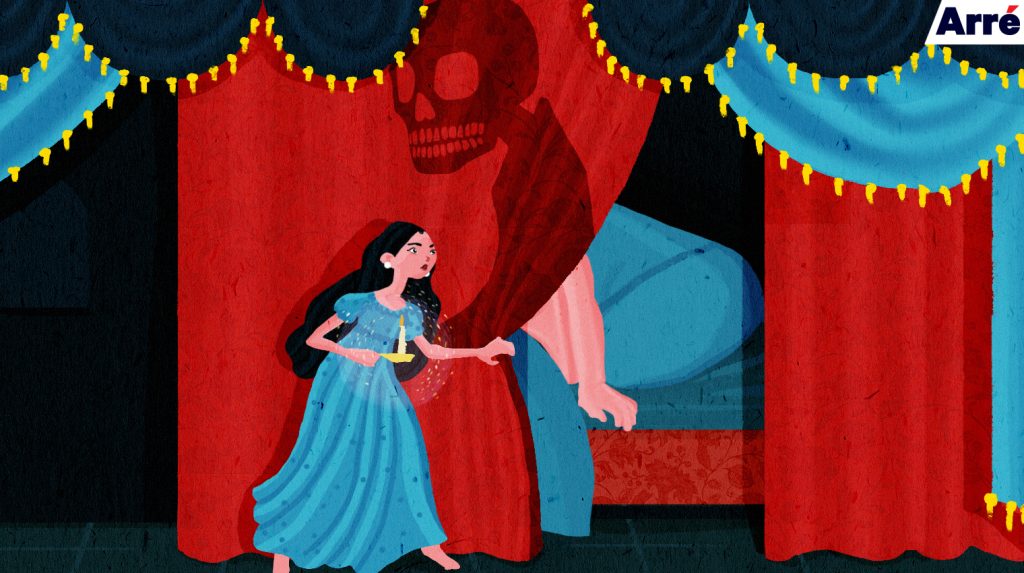
TRPs, my mother, remains glued to the TV, still absorbed in the specifics of the Roop ki Rani’s life and sudden death. “But she was 54. And a fitness freak,” my mother wonders aloud. The unspoken “then how?” hangs in the air while she scrambles to find the chink in Sridevi’s apparently airtight armour that can justify the cardiac arrest (as first reported), and perhaps explain the unexplainable. Evidently, my mother is not alone. Soon enough, random WhatsApp forwards and grave social media posts start trickling in that seek to explain exactly why and how Sridevi died. The reasons offered depend on the perceived gravitas of the source and range from diet, stress, pressures of being a celebrity, alleged surgeries, to patriarchal constructs, and lack of personal agency. The running thread was an attempt to let us know exactly what was wrong with Sridevi’s life that led to her death. What was not said but clearly heard was this: What is not wrong with our lives? Ergo, we are safe. It was no wonder that when the news refuting the claims of cardiac arrest came in, there was a sense of a morbid “gotcha!” Finally we had our reason. A bathtub (and allegations of alcohol) are specifics from her life. They are not then something that will happen in ours. Her death, hence, does not need to make us ponder our own mortality.It is hard to process the idea, especially when death itself is irrational and beyond all logical explanation.But ponder we do. Every time a celebrity dies unexpectedly, the wave of grief that sweeps the masses is almost always tinged with fear. The same fear that most of us otherwise manage to keep at bay by sheer denial and almost idiotic but conscious ignorance. Death is an inevitable fact of our lives, and yet almost every one of us pretends to go on with life without as much as acknowledging this looming truth. Ignoring the transience of our existence is a defence mechanism that humanity has perfected like an art form. And so, as far as we are concerned, death is something that always happens to the other. The other who deserves it, the other who can’t prevent it, the other who is too poor to find a way around it, the other who is too careless to have avoided it, the other who is too unfortunate to be at the wrong place at the time, the other who was too dumb or too unlucky to be caught in a disaster, the other who was born with the wrong set of genes. The other who is not, and cannot be us. This “othering” of the dying and the dead is a default reaction. It is just that some dead are better at being othered than the rest. The Adivasi woman who got lynched is an “other” who can be easily ignored by the majority who know they’d never find themselves in her shoes. But Sridevi (and other celebrities like her) are a different story. She is an “other” in a very different sense of privilege and class. She is “the better other”. And with her, we run out of excuses and explanations, forced to confront the one question we try our hardest to avoid. If she, with all her money and privileges, could not escape death, where does it leave us? A celebrity death is one of the few times when humanity as a whole (or a large chunk of it anyway) is forced to confront the truth about the transience of our very existence and admit that life is indeed short. It is hard to process the idea, especially when death itself is irrational and beyond all logical explanation. We are wired to find causations, logic, and patterns so that we can convince ourselves of all the reasons why we (and our loved ones) don’t fit in the pattern and hence are, for the want of a better expression, safe. In case of celebrities, this exercise then becomes a national tableau of macabre – a parade of wild, often inaccurate and insensitive speculations that feed our insatiable, sordid appetite for gossip, as much as they offer an effective, much-needed distraction from our own fears.

It is a constant reminder to value the moments and people and all those little excuses of joy that we are entitled to by virtue of being alive.
Image credit: ANI/Twitter