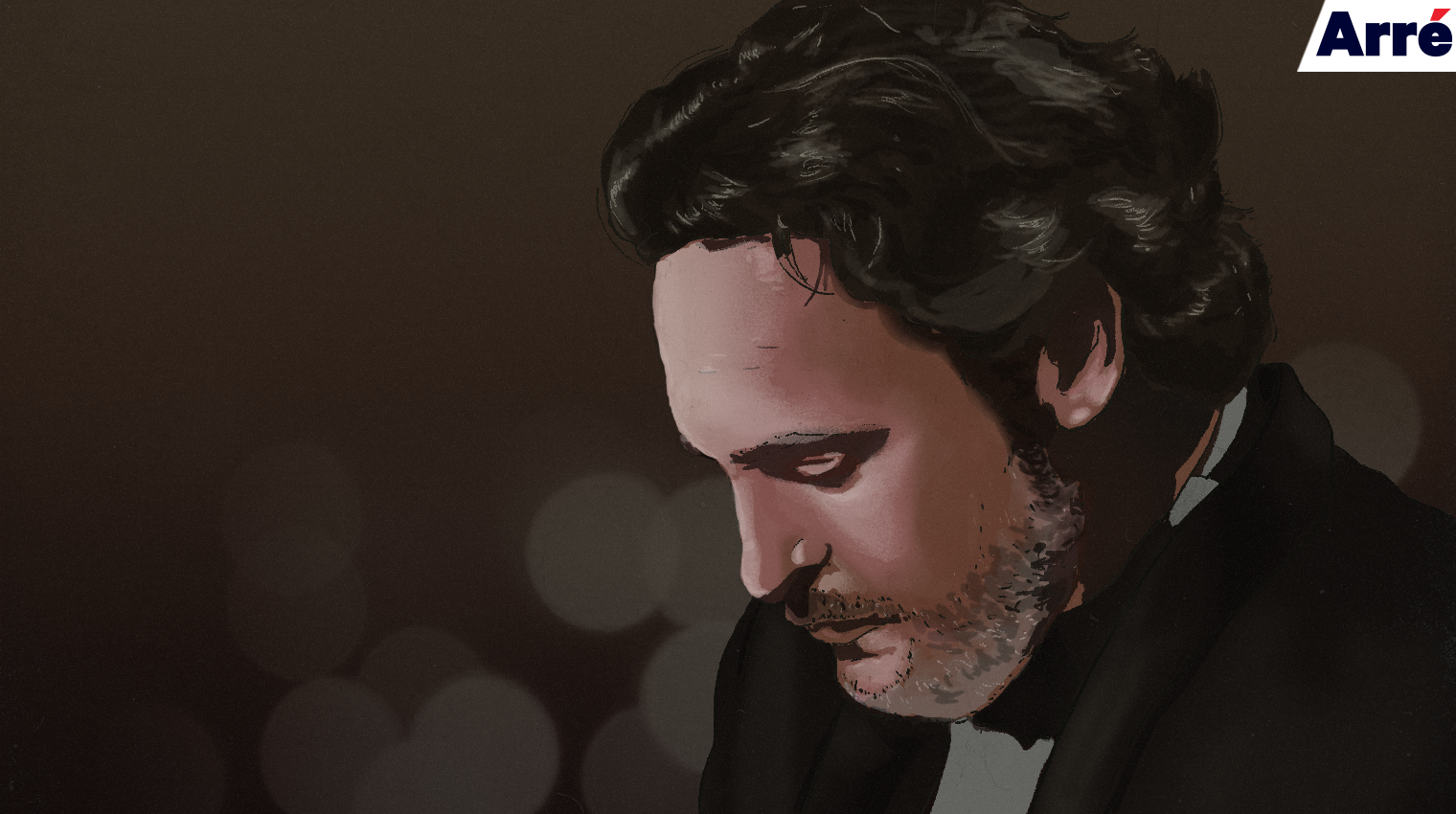
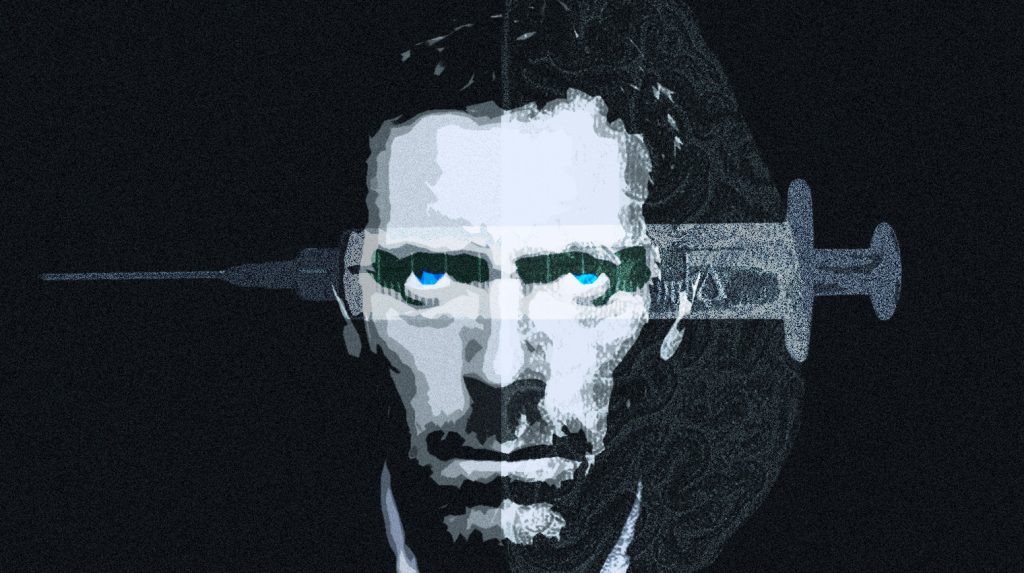
When Hugh Laurie debuted as the curmudgeonly doctor in
House MD in 2004, nobody imagined that a character as socially awkward, cranky, and downright misanthropic would go on to create TV history. House not only became one of the highest-paid roles on television, but also spawned a whole genre of programming based around deeply flawed central characters who wore their arrogance on their sleeve. But there was a catch. Their asshole behaviour would be excused by genius. Laurie, whose birthday it is today, started a minor movement. Now, more than a decade later, the Asshole is everywhere. Every second new series proposes a character that we despise and can’t help but like – whether it’s the sharp-tongued Will McAvoy in The Newsroom, the weird Dr Cal Lightman in Lie To Me, the seemingly emotionless Detective Hardy in Broadchurch, or even good ol’ sociopath Sherlock. There was once a time when this type of hero lived only in literature, in the works of the Brontë Sisters, Victor Hugo, Alexander Dumas, and Gaston Leroux. So popular were these characters in literature that there was a term dedicated to them (albeit a politer one)… the Byronic Hero. The Byronic Hero is an aberration to the romantic hero, a deeply cynical, melancholic man, exhibiting a sense of disillusionment with society. He is named for a particular type of protagonist first witnessed in English Romantic poet Lord Byron’s Childe Harold’s Pilgrimage. Byron, who was born with a club foot and felt victimised by the world, and in turn imbued his hero with all the qualities he possessed: Idealism, a distaste for social institutions, dysfunction, rebelliousness – and a sweet, sweet melancholy that was immensely seductive for women.The formula for creating the modern Asshole is simple. You start with a deeply damaged man, give him a dark back-story – maybe he grew up poor or he paid his way through med school by working as a stripper part-time.We’ve seen different iterations of the same character play out over and over again: In Clint Eastwood films, in Neil Gaiman’s Sandman, even in Terminator. But over the years, the Byronic Hero has mutated into another creature, this one more deeply disturbed, sometimes with an added layer of substance abuse issues. Think V from V for Vendetta, or the high-functioning alcoholic James Bond in Skyfall and Spectre. The Asshole is a logical, modern, and aggravated update on the Byronic Hero. The formula for creating the modern Asshole is simple. You start with a deeply damaged man, give him a dark back-story – maybe he grew up poor or he paid his way through med school by working as a stripper part-time. Step two: Give him an addiction, alcoholism or in the case of House, drugs. Step three: Let him be brilliant at his job. Step four: Give him a girl that he secretly likes, but pretends to hate. Step five: Use the right shots and editing techniques to exemplify these narrative choices. And there it is, an alpha male, irresponsible asshole. When you first meet the Asshole, you will be in no doubt that you are meeting one. He is introduced to us in a situation carefully contrived to dramatise his flaws. Take for instance, the pilot episode of House MD: The scene that introduces Hugh Laurie’s character opens with the camera focused on House’s leg. It captures his slow pace of walking due to his dependence on the cane, establishing the metaphor of being broken. This is also simultaneous licence for him to behave like an asshole. I don’t really have a problem with the Asshole. I enjoy him just like every other woman. In fact I was fully invested in the show because of Hugh Laurie and his character’s development was my obsession. But I wonder what it says about us that we enjoy seeing a flawed man at the centre of a narrative? What does it say about us that we enjoy Sherlock’s sociopathic tendencies, his manipulative nature, and yet yearn so badly for his emotional side that when it comes – right in the end and however minimally – we fall in love with him because we’re so grateful for him being sub-optimally human? Is it a perpetuation of the “women love bad boys” myth because we secretly yearn to be his redemption? A traditional Byronic hero, however, had no redemption. He was to meet a tragic end – all of the build-up in the narrative was meant to lead to exile, isolation, or death. Now, though, there is a neat resolution at the end of series like House MD and Sherlock and the Asshole hero is a legit character, entitled to survival.

Hugh Laurie was the original asshole. We have him to thank for the fact that our universe is populated with top-quality insults.
Courtesy: House MD /FOX