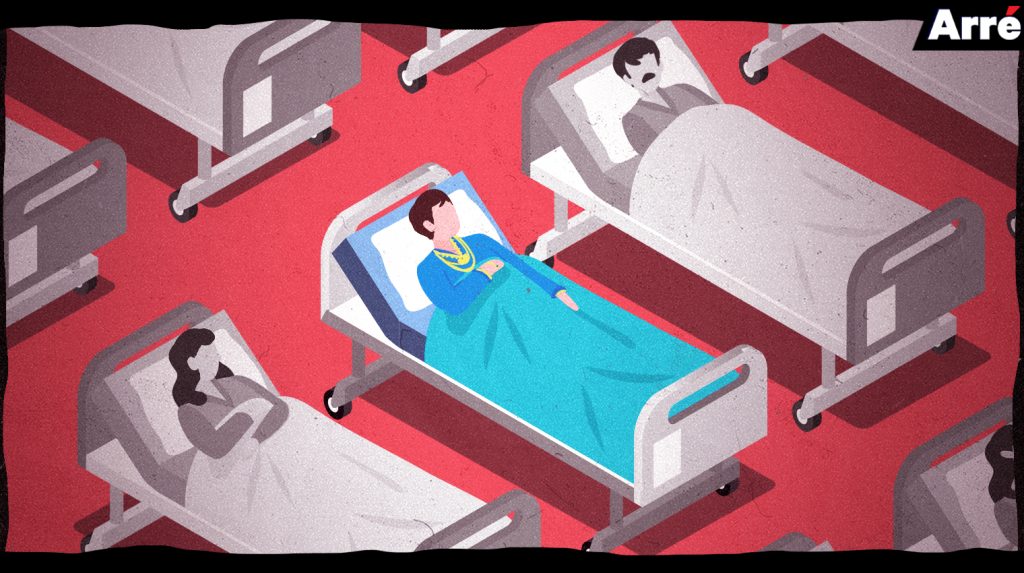

These are indeed trying times. Each one of us who has coughed or sneezed in the past month has feared the worst. Those of us with privilege, that is. The majority of people in India, and the world over, do not enjoy these privileges. They depend on local healthcare centres, public hospitals, and state-run facilities that the likes of us think of as nightmares. From standing in queues to sharing waiting rooms with those not as well-heeled as us, we dismiss the public healthcare system as a monstrous, ugly alternative that we’d actually do well to avoid all our lives. But at the moment the world’s knees are bent at ramps leading up to these institutions, in hope that they will lead to both care and cure. A cousin who consults for Max Hospitals frankly admitted to me last week that private institutions have no clue, nor are they capable of providing assistance at the moment. The government is set to soon involve private players to at least ramp up testing, but rather than bask in your select regal comforts thereafter, remember, these facilities should be the norm for “everyone”, regardless of whether they can afford that care. Their capital-driven models might make it impossible for them to even function as real estate for quarantine. In a way, healthcare has become so corporatised and capitalist its private arms are virtually of no use in the face of an epidemic we simply can’t throw money at. Though the test for COVID-19 is largely free across the globe (it was initially an expensive paid test in the US), and the rich still find ways to monopolise the delivery of healthcare, no one can buy or access an exclusive cure. What we need right now is humility, and to put faith in the system we love to distrust. There is literally, no other alternative. Of course, the headlines the world over will veer towards high-profile cases. In fact, were it not for the likes of Tom Hanks and Justin Trudeau’s wife getting infected, the world might have reacted slower. Celebrities like Idris Elba, have somehow been able to access selective testing without showing symptoms while countless others have been turned away by UK hospitals despite having several.My household help has asked me twice if it is safe anymore to come to the society where we live
Yet, there is no bargaining chip. There is little that Hanks can get access to compared to the next infected person. No information that can be purchased, no exclusive cure. People living in mansions and 3BHKs might be able to isolate themselves better, compared to the chawls of Mumbai and the slums of Delhi, but their co-dependence makes it impossible for the two to stay apart indefinitely. All the walls we have built over the years, are at the moment invisible to a tiny, viral strand that couldn’t care less about distinctions only men can make. The coronavirus will offer multiple lessons when it subsides. One of those lessons should be to construct a more accessible, unanimous healthcare system that behaves more like a sidewalk than a staircase defined by entitled access. We are at a point where the health of each of us, irrespective of our religion, class, or caste, depends on the other’s willingness to commit. It has taken an imperceptible virus to remind us that the differences we have spent years identifying in each other are, essentially, irrelevant. It’s a cruel test, yes, but might kindness and empathy become its inevitable diagnosis? One can hope.What we need right now is humility, and to put faith in the system we love to distrust.