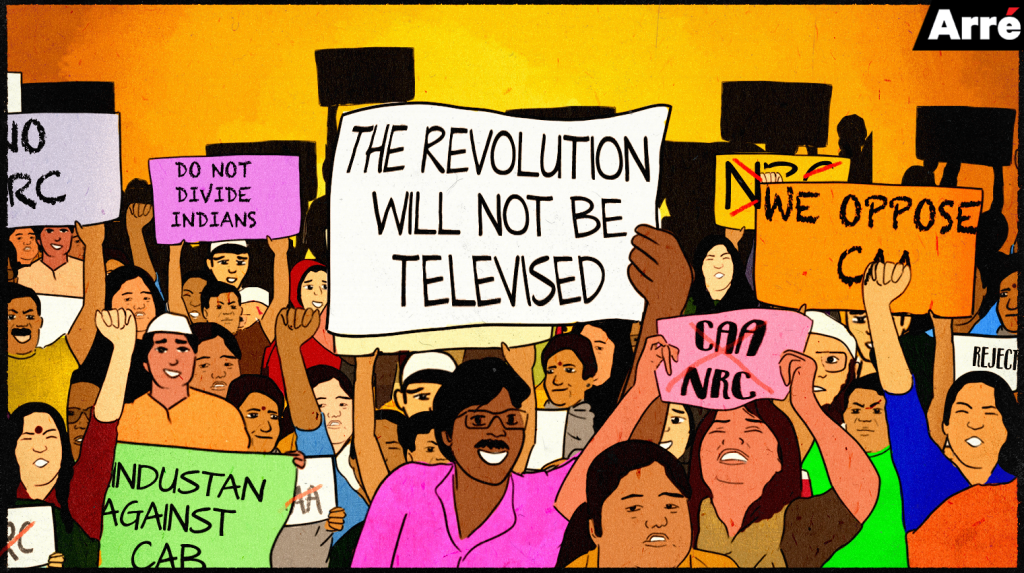

While encouraging, it did feel like it was a small social media bubble. But on Thursday, we saw just how wrong that was. Thousands of Indians spilled out on the streets, with some reports saying over one lakh people attended the protest in Mumbai at August Kranti Maidan. This was the biggest legal protest in the country, and it did not disappoint. The symbolism of the location — August Kranti Maidan is where the Quit India Movement began 77 years ago — was not lost on demonstrators who were rediscovering their dormant patriotism (which, strangely enough, isn’t stirred at all by standing up for national anthems in theatres out of self-preservation). Across the rest of the nation as well, coverage of protests and the government’s response gathered steam, amplified by the imposition of Section 144 in three regions, cutting off the internet in Delhi, and the arrest of public figures like Ramchandra Guha and Yogendra Yadav. People were spurred to defy the ban on public assembly in cities across India to make their voices heard. Social media, at least for a while, was transformed with support, awareness, and dare I say, hope. But just to be clear: All is most definitely not well. The same time Mumbai had its protest, two people were killed in Mangalore, and what looked to be a peaceful protest at Jama Masjid in Delhi the next day turned violent with even teenagers being attacked. All told, six people have died so far from the protests. And we know the establishment does not take dissent sportingly. A quick perusal of Twitter trends makes it apparent that the IT Cell is hard at work doctoring images, fueling templates, spreading fake news, and, hearteningly, deleting some old tweets. The ruling party’s MPs kept tweeting incendiary things, its official statements contradicted its own leaders, its youth wing was caught harassing people, and members showed up in fake skullcaps and outrageously attacked a group of schoolkids. And now, with reports from the evening of December 20 turning up alarming images of violent protests in UP and Delhi, the need of the hour is more protests like the one that took place in Mumbai, brimming with positivity, hope, and in the tradition of freedom fighters in whose footsteps we’ve unwittingly begun to follow, ahimsa.People took it upon themselves to spread information about CAA and NRC, and put up explainers on social media.
Now, there is a sense that this idea is not fringe anymore. There’s a feeling that it could get better. Just when it seemed like hope might be lost for those who did not agree with the establishment, these protests have given us so many powerful reminders that dissent is still alive in this country, despite the damndest efforts of those trying to stifle it. The past week is full of unforgettable visuals that underscore this fact: the girl handing Delhi police a rose; Hindus and Sikhs forming a chain around Muslims offering namaz; protests all over the world, from California to Auckland; Bangalore Police not just letting protests happen but feeding the detainees; Mumbaikars at the Thursday protest who chanted slogans declaring their love for the city’s police. It might very well lead to nothing, but at least we’ll know we went down fighting. And we need to. We need to keep going. Keep making our voices heard. Keep protesting (non-violently, please). Keep spreading information. Forget the loonies on the other side, and focus on the large swathe of people who are just becoming aware of things. Together, we might just be able to make this damn thing happen. Spoiler alert: Silicon Valley’s team of engineers didn’t just survive the crisis, they made it through the next four years, and found some glory along the way, despite the challenges. India needs to do exactly the same.We need to keep going. Keep making our voices heard. Keep protesting (non-violently, please).