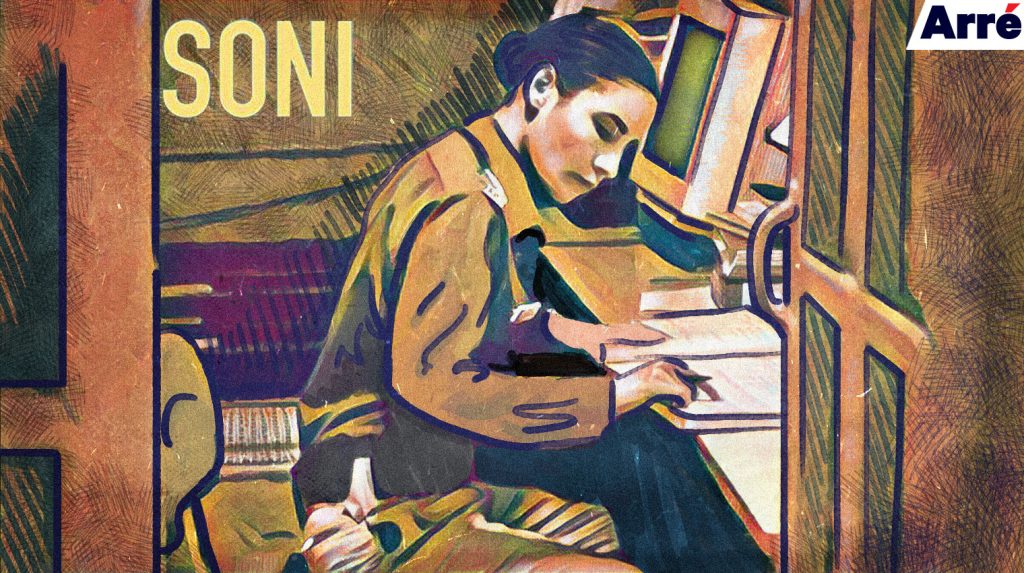

There’s a poignant scene in debutante Ivan Ayr’s
Soni that underscores the blurring chasms between being an Indian woman and an empowered Indian woman. One night, Kalpana (Saloni Batra), the superintendent of Delhi Police, appeals to her newly promoted cop husband – positioned higher in the rungs of their professional hierarchy – to reinstate Soni (a terrific Geetika Vidya Ohlyan), a junior woman officer punished with disciplinary action. Making his reluctance known, the husband chides Kalpana for getting too attached to her juniors. She bends her head down, swallows the criticism, but presses on; he eventually gives in. But their body language reveals a significant detail: The couple aren’t on equal footing, even inside the confines of their bedroom. In this fleeting moment, Ayr manages to illustrate the distinct shades of powerlessness that come with being a woman in India. Kalpana’s daily fate – not unlike Soni’s – is coloured by the whims of powerful men, like her husband. What differs are the shades of their dependance: Kalpana’s stature as an upper-class woman and her authority at work guarantees that she is better equipped to protect herself. Soni, a rebellious lower-class officer, on the other hand, is used to consistently being punished for protecting herself. Yet both of them, like so many Indian women, must adhere to the demands of the patriarchal system designed to work against them. With Soni, Ayr examines the embedded power-structures in our society and poses daunting questions: Can women really be empowered in a country where patriarchy is the mother tongue? What is the point of women defying expectations, when the society thrives on turning them into submissive puppets? The supremely well-acted, shot, and directed film follows Kalpana and Soni while they partake in decoy operations meant to nab sexual harassers and rapists. It opens with Soni mercilessly beating up a stranger who harasses her in the dead of the night, while she is undercover. In that moment, it’s understood that Soni isn’t the kind of woman who tolerates routine patriarchal perversions, even when she is tasked with operating under the limitations of law. It also means that India’s patriarchal system impels her to bow down to these perversions – Soni underlines that helpless journey. In the film, Soni is questioned every time she retaliates and renders her perpetrators powerless. An inquiry is ordered against Soni for hitting her harassers. Her behaviour is branded “reckless” and the higher-ups conclude that it is against “protocol”. Meanwhile, her perpetrators get away, on account of either the severity of their injuries, their stature as navy officers, or their connections within the force. The system has after all, always tilted toward cushioning men.
The film matter-of-factly mines Kalpana and Soni’s personal predicaments as a stand in for the helplessness of almost every woman in the country
Image credit: Netflix
Soni’s undramatic indictment of how normalised patriarchy continues to smother even the most empowered women, is probably the most riskiest and bravest.But perhaps, the most unflinching evidence of the system being a rigged lies in how women in the film band up together: Kalpana backs Soni every time there’s even a sniff of an inquiry against her. Soni, in return, looks upto Kalpana with devoted admiration. In a quietly powerful moment, she even tells Kalpana that it’s only her validation and opinion that matters to her. Soni’s elderly neighbour, dutifully brings her food when her gas runs out. And Kalpana’s sister-in-law, defends her from intrusive queries about her pregnancy plans. It’s as if these women are acutely aware that standing up to patriarchal mindsets has irrevocable consequences and showing an united front is the only brand of rebellion within their reach. At a time when the wounds of #MeToo are yet to be healed, Soni’s indictment of how normalised patriarchy continues to smother even the most empowered women, is probably the most riskiest and bravest (I found it difficult to not tear up at the melancholic closing shot). India is afterall, no country for (empowered) women. Soni streams on Netflix from today.